
There is something universally comforting about a Sunday roast, but sometimes the usual suspects need a vibrant update. If you have a pork loin and a few oranges in your fruit bowl, you are halfway to creating one of South America’s most beloved festive dishes.
This Brazilian-style roast is all about the balance of heavy and light. Pork loin is a lean cut that can easily dry out, but this recipe solves that problem with a “Vinidinha”—a robust marinade of fresh citrus, white wine, and plenty of garlic. The acid from the oranges breaks down the meat fibres, ensuring every slice is incredibly tender, while the natural sugars caramelise in the oven to create a sticky, golden, aromatic glaze.
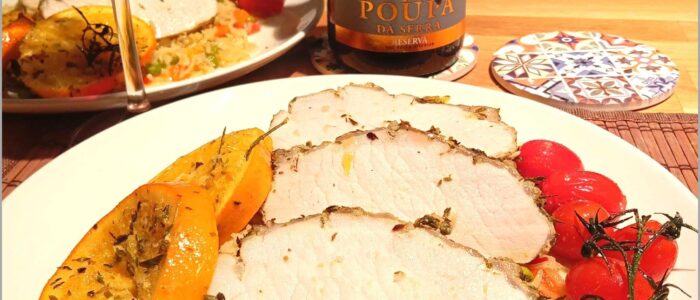
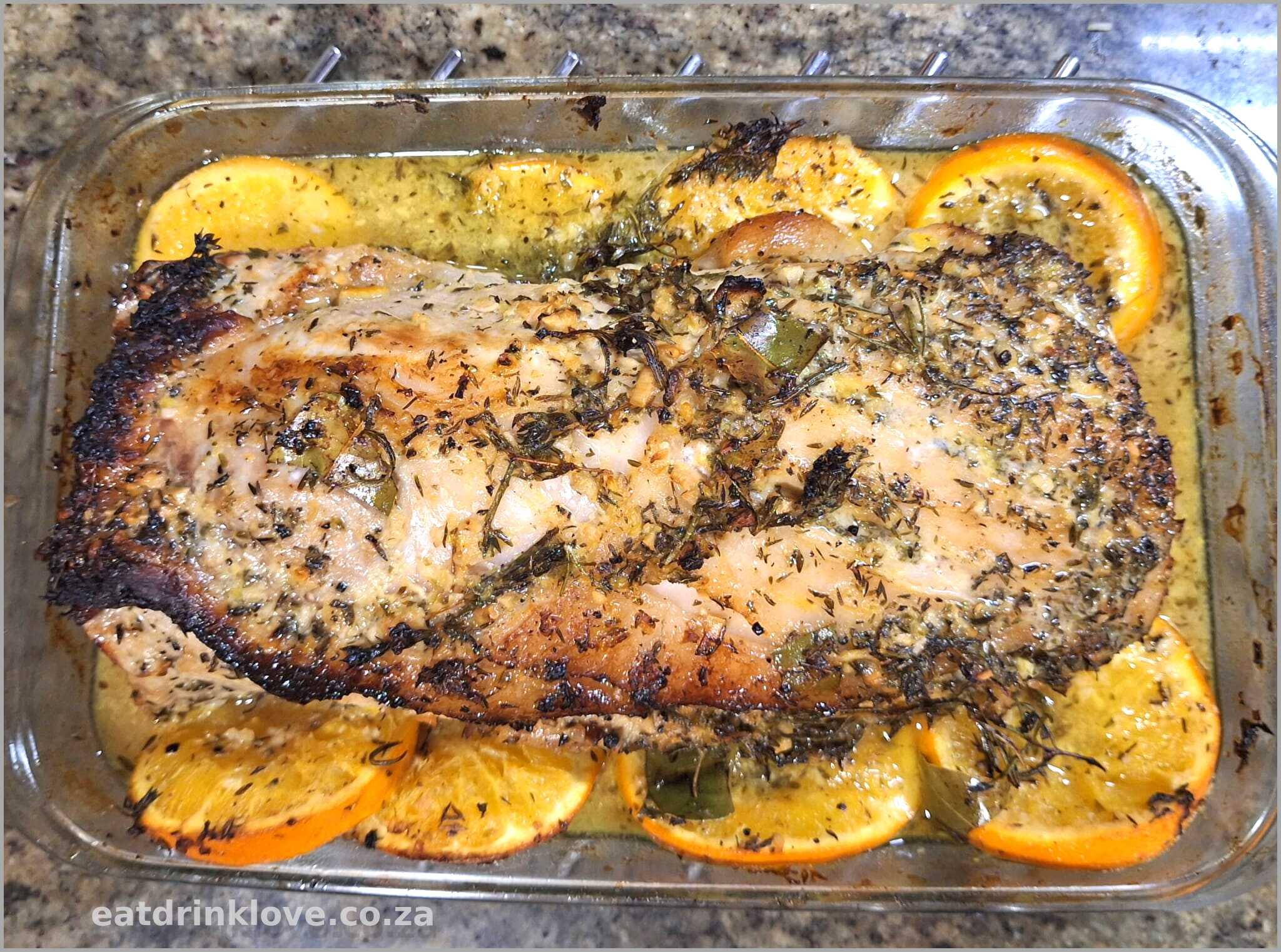
It creates a centrepiece that looks spectacular—glistening with pan juices and adorned with roasted orange slices—yet requires surprisingly little active effort in the kitchen.
- Prep Time: 20 minutes (+ 4 hours marinating time)
- Cook Time: 1 hour 15 minutes (approx.)
- Serves: 6–8 people
Ingredients
The Meat
- 1.5 kg Boneless Pork Loin (fat cap left on if possible)
- Salt and freshly cracked black pepper
The Marinade
- 240 ml Freshly squeezed orange juice (about 3–4 oranges)
- 120 ml Dry white wine (Sauvignon Blanc or Pinot Grigio work well)
- 60 ml Olive oil
- 6 cloves Garlic, minced or crushed into a paste
- 1 Tbsp Fresh rosemary, chopped (or 1 tsp dried)
- 1 Tbsp Fresh thyme leaves (or 1 tsp dried)
- 1 tsp Dried oregano
- 2 Bay leaves
The Garnish
- 2 Oranges, sliced into rounds
- Fresh parsley or rosemary sprigs for plating
Instructions
Prep the Loin: Pat the pork loin dry with paper towels. Using a sharp knife, score the fat cap in a diamond (cross-hatch) pattern. This helps the fat render and allows that delicious marinade to penetrate deeper. Rub the meat generously with salt and pepper on all sides.
Make the Marinade: In a bowl, whisk together the orange juice, white wine, olive oil, minced garlic, rosemary, thyme, and oregano.
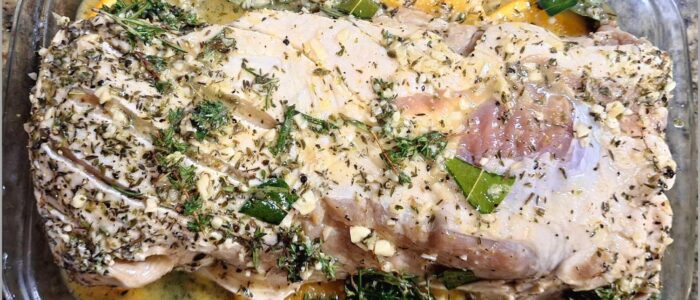
Marinate: Place the pork in a large Ziploc bag or a deep baking dish. Pour the marinade over the pork and add the bay leaves. Chef’s Note: For the best results, let this sit in the fridge for at least 4 hours, or preferably overnight.
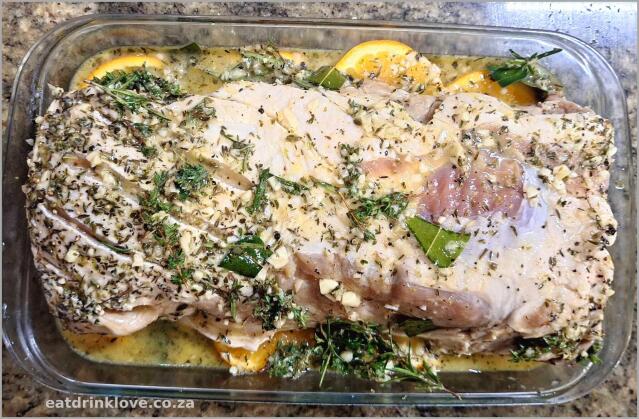
The Roast: Preheat your oven to 180°C (350°F). Remove the pork from the marinade (save the liquid!). Place the pork, fat side up, in a roasting pan. Arrange the fresh orange slices around the meat or tucked underneath the edges. Pour about half of the reserved marinade into the bottom of the pan.
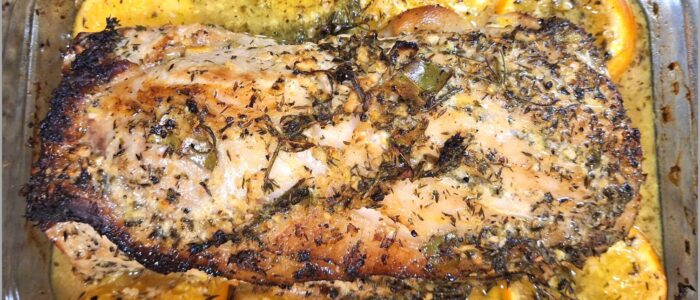
Baste and Bake: Roast for approximately 1 hour to 1 hour 15 minutes. Baste the pork with the pan juices every 20 minutes. This builds that sticky, golden glaze. If the liquid evaporates too quickly, add a splash of water or more wine to the pan.
Check for Doneness: The pork is done when an internal thermometer inserted into the thickest part reads 63°C for a juicy medium-well.
Rest and Reduce: Remove the pork from the oven, transfer it to a carving board, and tent loosely with foil. Let it rest for 15 minutes. While the meat rests, you can simmer the remaining pan drippings in a small pot to thicken them into a sauce.
Serve: Slice the pork into medallions. Arrange on a platter with the roasted orange slices and drizzle with the reduced pan sauce.
A Bite of History: The Brazilian Table
While this dish is perfect for a casual weekend meal, in Brazil, Lombo de Porco carries a festive weight. It is a staple of the Ceia de Natal (Christmas Eve Dinner) and New Year’s celebrations.
In Brazilian culture, especially in regions like Minas Gerais where pork is king, the pig represents progress and moving forward (because a pig roots forward with its snout), unlike chickens which scratch backward. For this reason, pork is often preferred over poultry to ring in the New Year, symbolising prosperity and forward momentum for the coming months.
The use of citrus with pork is a technique inherited from Portuguese colonization, evolving over centuries to include the bright, sweet oranges that grow so abundantly in Brazil’s tropical climate. It is a beautiful example of how simple ingredients—meat, fruit, and fire—can create a dish that feels like a celebration.