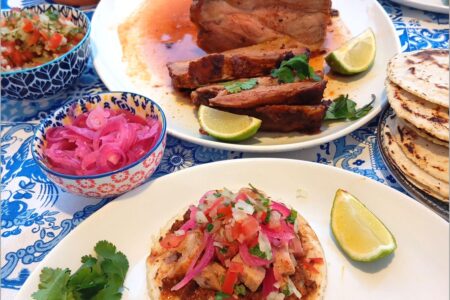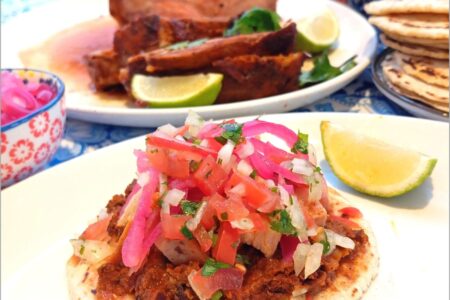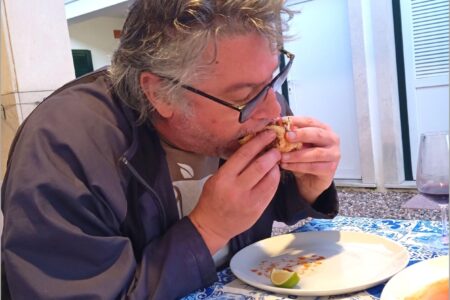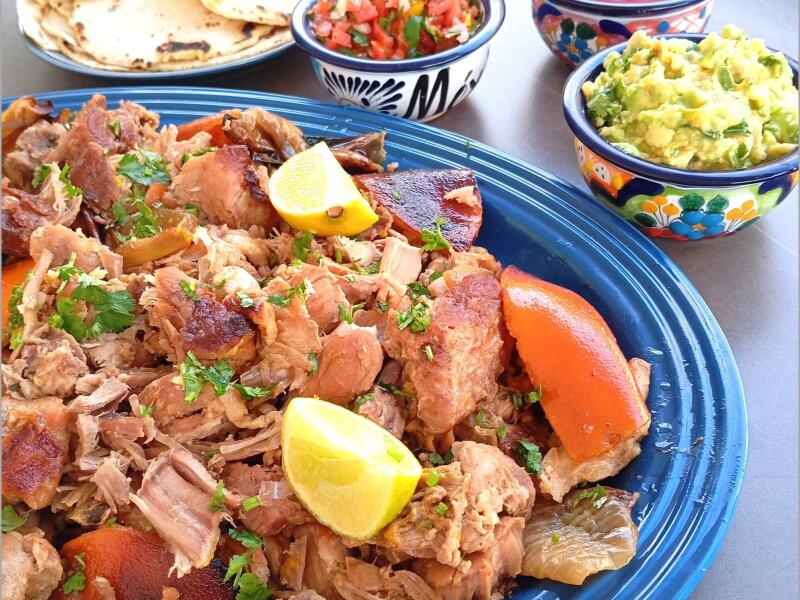

Sometimes, the best meals are the ones that demand a little patience, a good fire, and perhaps a few bottles of wine to enjoy while you wait! We decided to transport our taste buds to the vibrant Yucatán Peninsula in Mexico. and tackle a true classic: Cochinita Pibil.
If you are unfamiliar with this magnificent dish, Cochinita Pibil is a traditional Mayan slow-roasted pork recipe. Historically, the meat is wrapped in banana leaves and buried in a pit with hot stones (a píib) to cook slowly for hours. The result? Unbelievably tender, pull-apart pork infused with earthy, citrusy, and deeply savoury flavours.
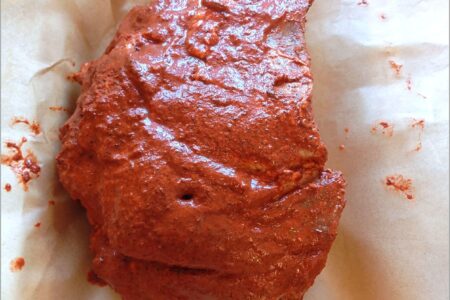
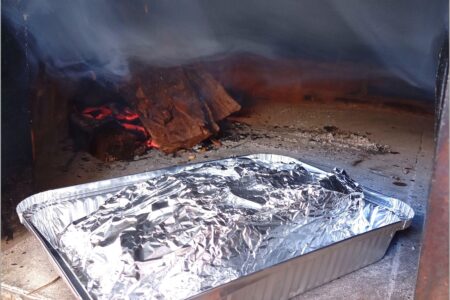
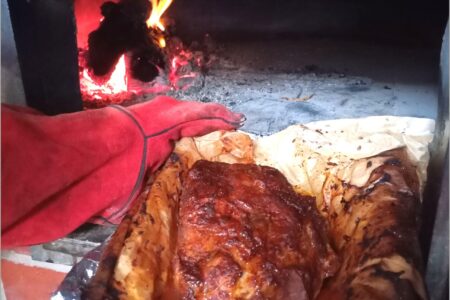
While we didn’t dig a hole in the garden, we did fire up our wood-fired oven. We wrapped a beautiful piece of pork neck in parchment and foil (a perfect hack when you are fresh out of banana leaves!) and let the fire do its magic.
Here is how you can recreate this incredible Mexican feast at home—whether you have a wood-fired oven or a standard kitchen oven.
- Prep time: 20 minutes (plus overnight marinating)
- Cook time: 5 hours
- Servings: 6-8
Ingredients
For the Pork & Marinade:
- 1.5 kg to 2 kg boneless pork neck (or pork shoulder)
- 100g achiote paste (this gives it that signature vibrant red colour!)
- 120ml fresh orange juice
- 60ml fresh lime juice
- 2 tbsp white wine vinegar
- 4 cloves garlic, peeled
- 1 tbsp Mexican oregano
- 1 tsp ground cumin
- 1/2 tsp ground cloves
- 1 tsp black peppercorns
- Salt to taste
To Serve:
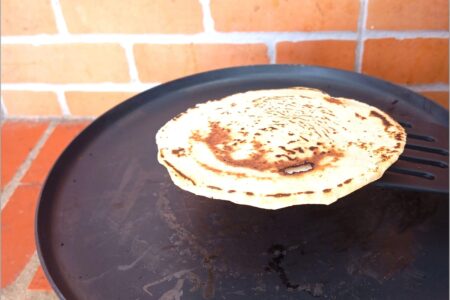
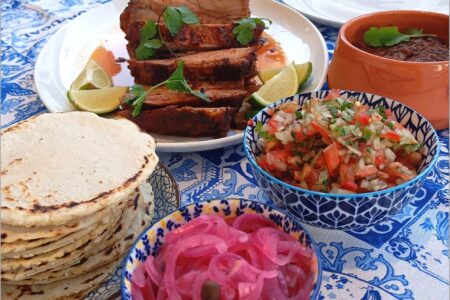
- Homemade corn tortillas (warm and slightly charred). A recipe can be found here.
- Refried beans, earthy black or pinto beans, slowly cooked down and mashed until beautifully rich and creamy, providing a comforting, savoury base for your warm tortillas.
- Pickled red onions, finely sliced red onions quickly steeped in a vibrant splash of citrus juice or vinegar with a hint of spice, offering a bright, tangy crunch to cut through the rich meat.
- Xni-pec: A traditional Yucatán salsa (diced fresh tomatoes, red onion, fresh coriander, lime juice, and a dash of chilli). A recipe can be found here.
Instructions
- Prepare the Marinade: In a blender, combine the achiote paste, orange juice, lime juice, white wine vinegar, garlic, Mexican oregano, cumin, cloves, peppercorns, and a generous pinch of salt. Blend until you have a smooth, vibrant red sauce.
- Marinate the Pork: Place your pork neck in a large dish. Pour the marinade over the meat, massaging it in to ensure every inch is coated. Cover and leave it in the fridge overnight. This is crucial for developing those deep, complex flavours!
- Wrap it Up: Preheat your oven to 160°C (or get your wood-fired oven to a steady, moderate roasting heat). Lay out a large sheet of aluminium foil, topped with a sheet of baking parchment. Place the marinated pork in the centre and wrap it tightly to seal in all the moisture and steam.
- Slow Roast: Place the wrapped pork in a roasting tin and cook for 4.5 hours.
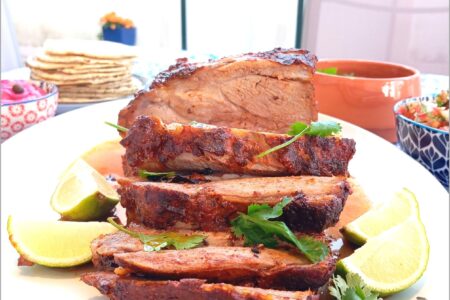
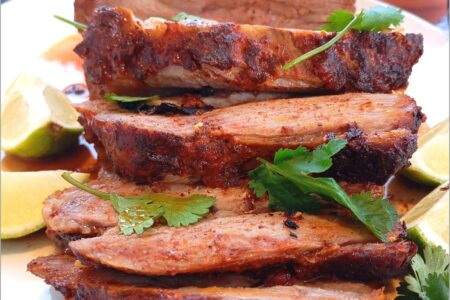
- The Final Char: Carefully unwrap the top of the parcel, exposing the meat. Return it to the oven for another 30 minutes. This allows the juices to reduce slightly and gives the outside of the pork a beautiful, caramelised bark.
- Shred and Serve: Remove from the oven and let it rest for 15 minutes. Use two forks to shred the incredibly tender meat, tossing it in its own rich cooking juices.
Chef’s Top Tips for the Perfect Taco Plate
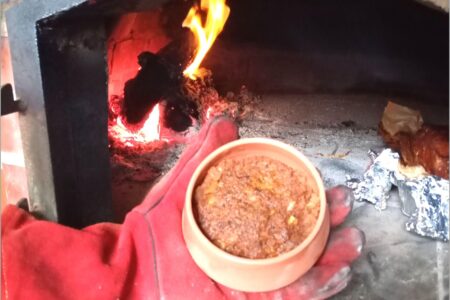
- Smoke your beans: Want to take your sides to the next level? We popped our terracotta pot of refried beans into the wood-fired oven for the last 15 minutes of cooking. It infused them with an irresistible, extra smoky flavour.
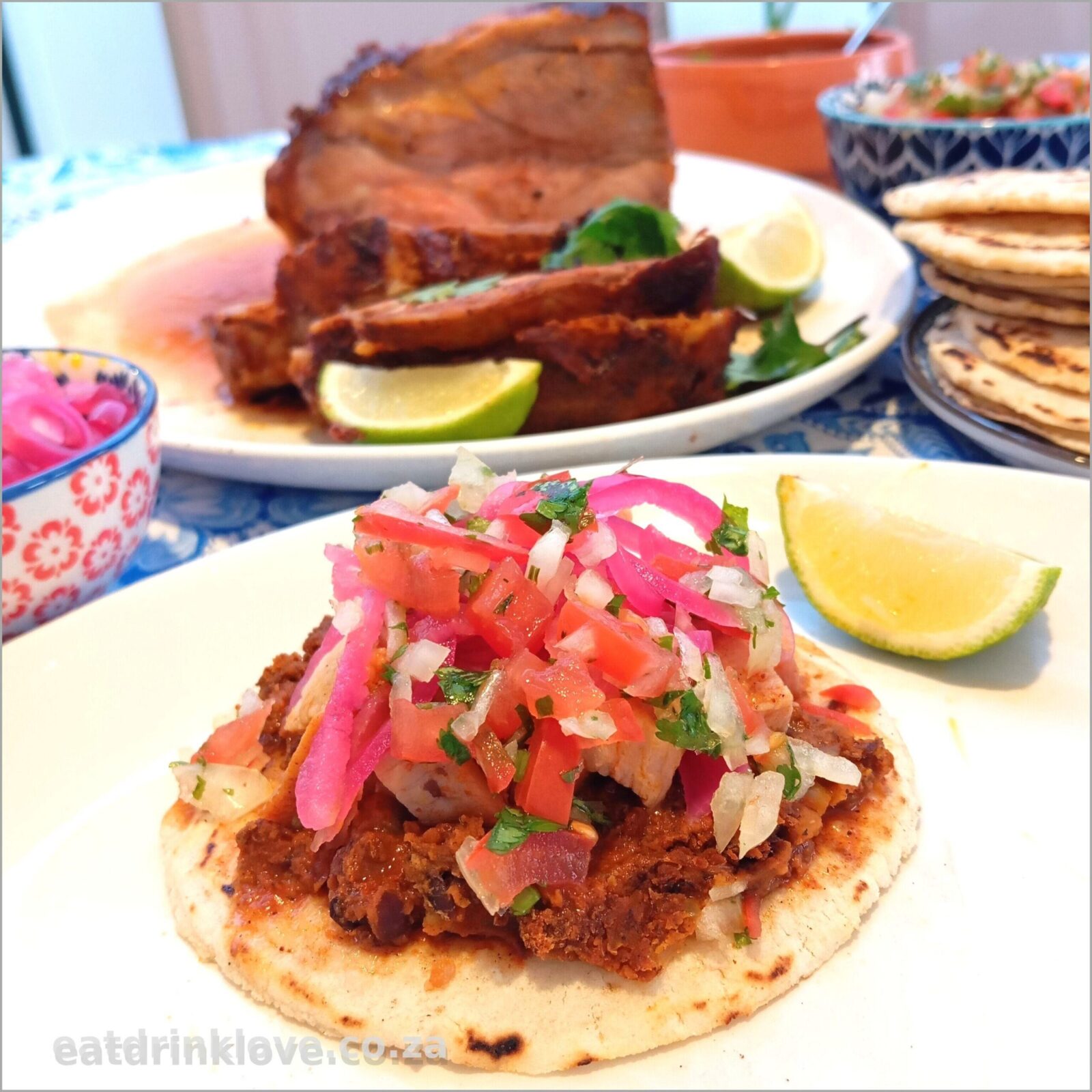
- Layering is key: To build the perfect taco, take a warm corn tortilla, spread a generous layer of those smoky refried beans, pile on the juicy Cochinita Pibil, and top with bright, acidic pickled red onions and fresh Xni-pec salsa to cut through the richness.
The Rich History Behind Cochinita Pibil
To truly appreciate Cochinita Pibil, we have to travel back in time to the Yucatán Peninsula, long before modern ovens existed. This dish is a glorious collision of indigenous Mayan traditions and Spanish influences, making it a true taste of Mexican history.
The word pibil originates from the Mayan word píib, which translates to ‘buried’ or ‘cooked underground’. Traditionally, the Mayans would dig a large pit in the earth, line it with hot stones, and build a wood fire. Once the stones were glowing red, they would bury their meat—wrapped tightly in banana leaves to protect it and lock in the moisture—and leave it to slow-roast overnight.
Originally, the Mayans used native meats like venison, wild turkey, or peccary (a type of wild pig). However, when the Spanish arrived in the 16th century, they brought domestic pigs with them. The locals began adapting their traditional píib cooking method to this new meat, and thus, cochinita (meaning ‘little pig’) pibil was born!
The signature vibrant red colour and earthy flavour come from achiote (annatto seeds), an ingredient native to the tropics of the Americas, which the Mayans also used for body paint and dyes. Combined with the juice of bitter Seville oranges—another Spanish introduction—the marinade acts as a tenderiser, resulting in that incredible, melt-in-the-mouth texture we know and love today.
While we might not all have the space to dig a píib in our back gardens, recreating this slow-roasting method in a wood-fired or conventional oven is a wonderful homage to this centuries-old culinary art.