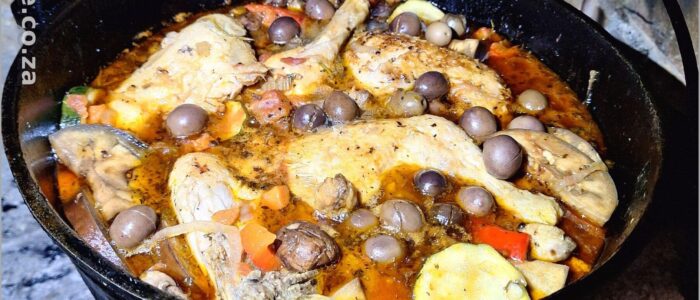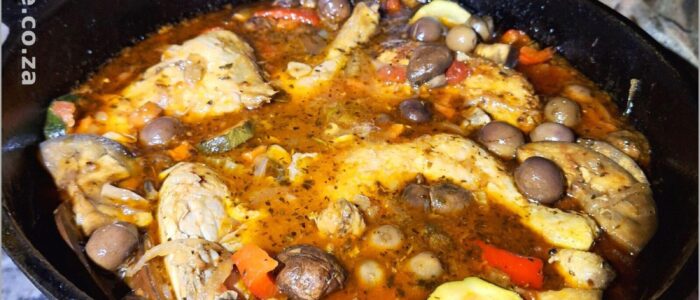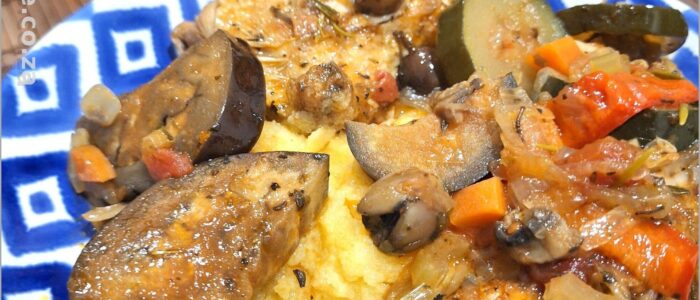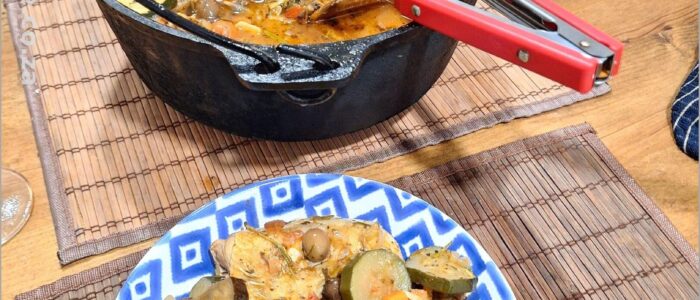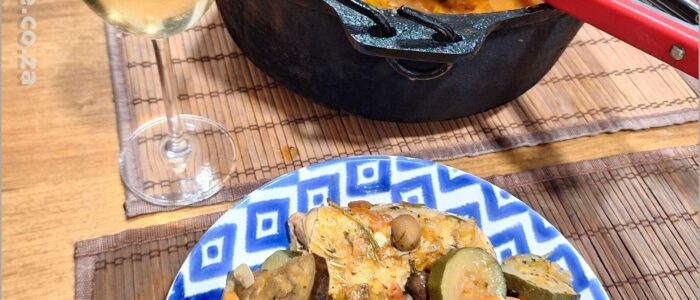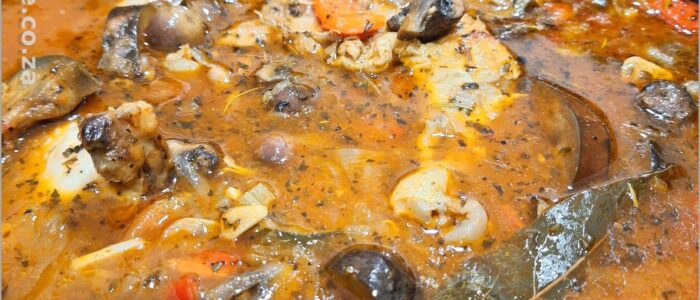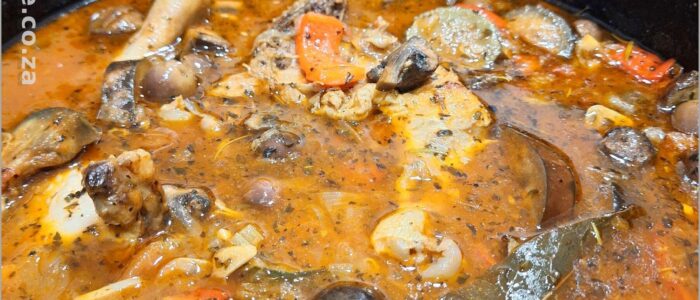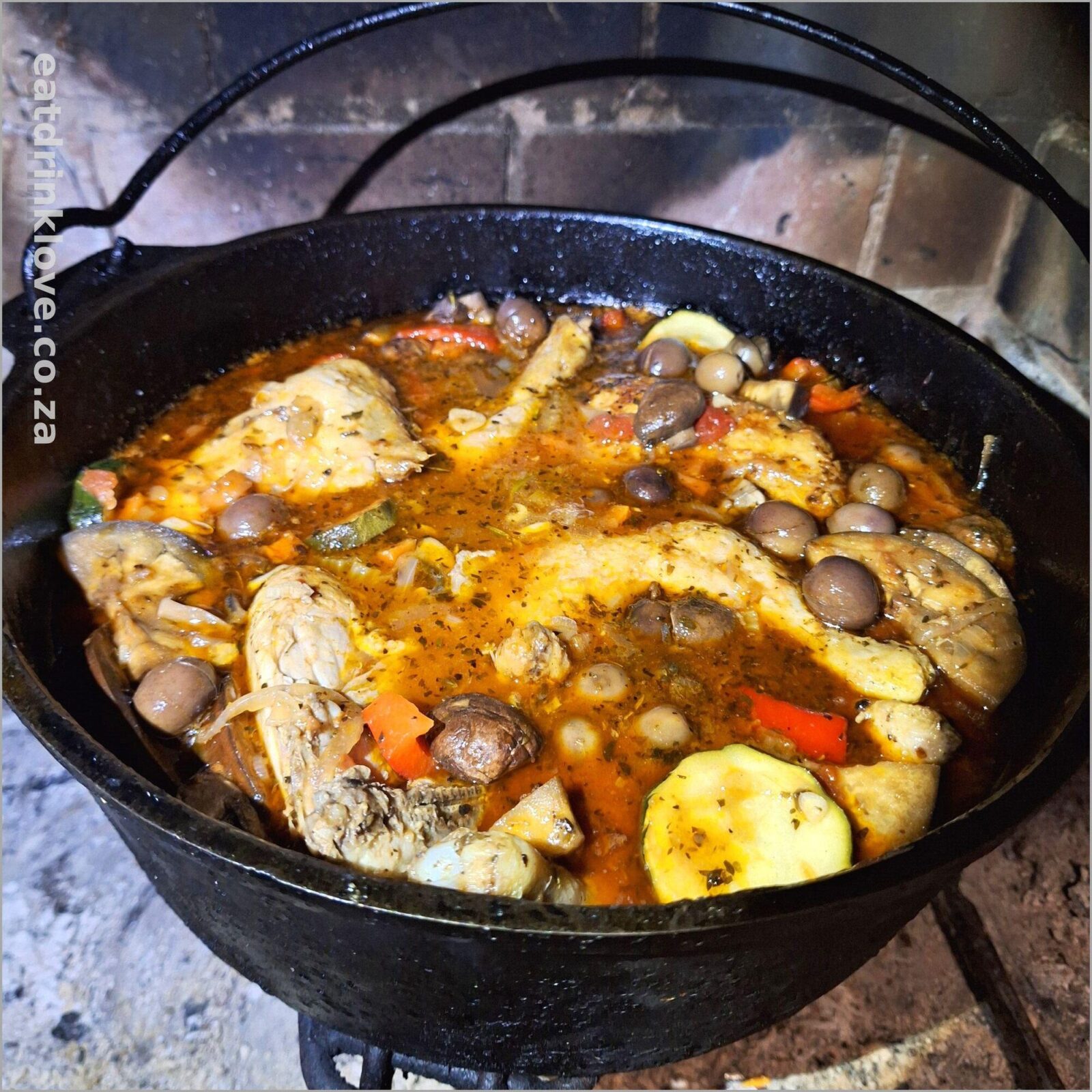

There is something undeniably comforting about a rich, slow-simmered chicken stew, especially when it’s bubbling away in a cast-iron pot. Here I am sharing my take on a beloved Italian classic: Chicken Cacciatore.
The base of this recipe was heavily inspired by the wonderful Nagi over at RecipeTin Eats. While her version leans closer to a strict traditional interpretation, I simply couldn’t resist putting my own spin on it. I’ve bulked it up with a vibrant medley of colourful vegetables—think tender aubergine, sweet red bell peppers, and earthy mushrooms—and tweaked the cooking method to build an incredibly deep, savoury flavour profile.
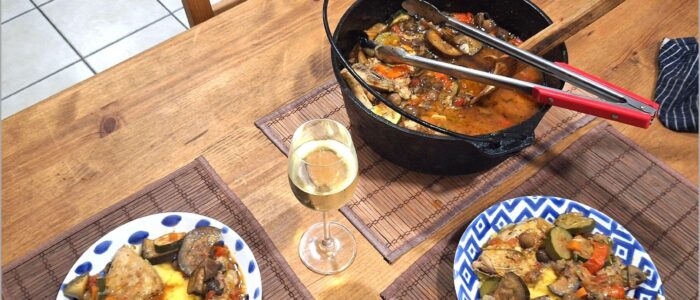
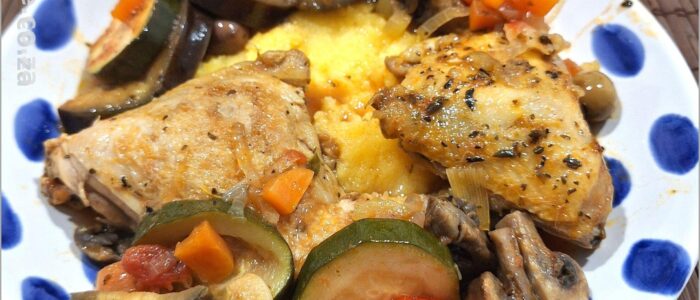
Whether you simmer this slowly on your kitchen stove or take it outside to bubble over the coals in a Dutch oven (highly recommended for that ultimate rustic feel!), the result is tender, fall-off-the-bone chicken swathed in a rich, herbaceous tomato and wine sauce. Serve it over a bed of creamy polenta or buttery mashed potato, and you have a guaranteed crowd-pleaser.
Ingredients
- 1.5 kg chicken pieces: Traditionally, a combination of thighs and legs works best, but cutting up a whole chicken is also perfect for this rustic dish.
- 2 onions: Finely sliced.
- 2 medium carrots: Peeled and cut into 5mm cubes.
- 2 celery sticks: Halved lengthwise and cut into 5mm slices.
- 3 fresh rosemary sprigs
- 4 bay leaves: Fresh or dried.
- 6 garlic cloves: Finely sliced.
- 5 anchovy fillets: Minced (the secret weapon for an incredible umami depth!).
- 250g mushrooms: Quartered.
- 2 red bell peppers: Sliced 1cm thick.
- 1 medium aubergine: Cut into 3cm chunks.
- 1 large courgette: Cut into 1cm slices.
- 3 Tbsp tomato paste
- 250 ml dry red wine
- 500 ml chicken stock
- 400g canned diced tomatoes
- 25 whole Kalamata olives: Pitted.
- 1 Tbsp dried oregano
- Salt and freshly ground black pepper
- Olive oil: For frying.
- Fresh parsley: Chopped, to garnish.
Method
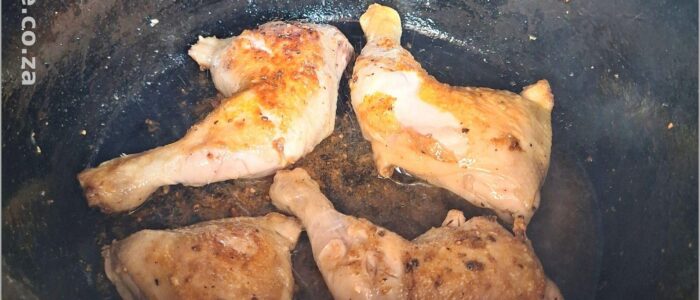
- Prepare the Chicken: Season the chicken pieces generously with salt and pepper on both sides.
- Brown the Meat: Heat about 3 tablespoons of olive oil over high heat in a large, deep pot or Dutch oven (ensure it has a well-fitting lid). Place the chicken in the pot and brown beautifully on both sides. Remove the chicken and set it aside on a plate.
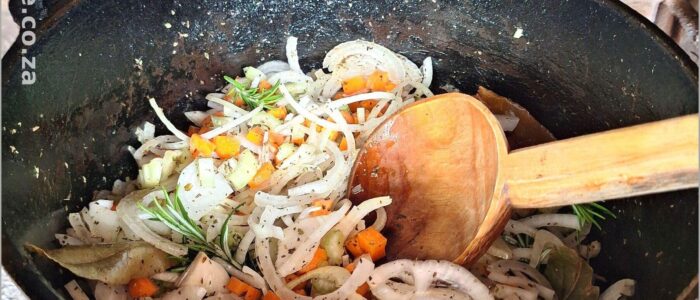
- Start the Soffritto: Lower the heat slightly. Add the onions, carrots, celery, rosemary sprigs, bay leaves, and dried oregano to the pot. Sauté until the onions soften and become translucent.
- Build the Flavour Base: Make a small clearing in the middle of your pot. Add the minced anchovies, sliced garlic, and tomato paste. Let this cook in the centre for about 5 minutes to cook out the raw tomato flavour, then stir it all together with the vegetables.
- Deglaze and Reduce: Pour in the dry red wine. Stir well, scraping up any delicious browned bits from the bottom of the pot. Bring to a simmer and allow the wine to reduce by about half.
- Create the Sauce: Add the chicken stock and canned diced tomatoes. Stir well and bring back to a simmer, allowing the liquid to reduce by roughly 25% (about 15–20 minutes) to concentrate the flavours.
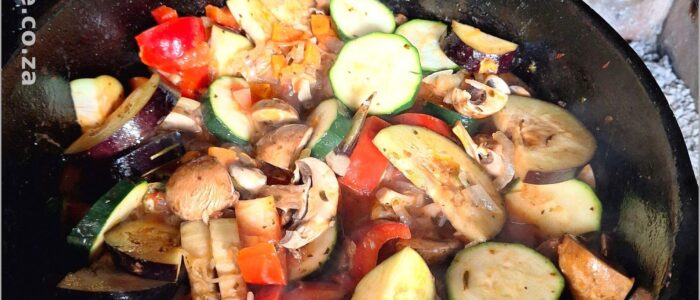
- Add the Veggies: Tip in the mushrooms, red bell peppers, aubergine, and courgette. Give everything a good stir and let it cook for another 5 minutes.
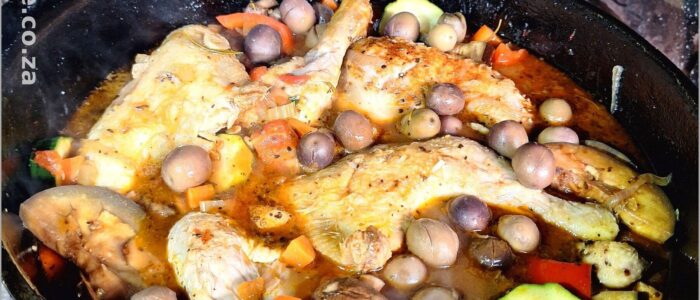
- Simmer the Stew: Gently place the browned chicken pieces back into the sauce, along with any resting juices from the plate. Cover the pot with its lid, reduce the heat to low, and let it simmer gently for 1 hour.
- The Final Touch: Remove the lid, stir in the pitted Kalamata olives, and let the stew simmer uncovered for a final 10 minutes to thicken the sauce slightly.
- Serve: Ladle generously over creamy polenta or mashed potatoes, and garnish with a sprinkling of fresh parsley.
Chef’s Tips for the Best Cacciatore
- The Outdoor Element: If you have a cast-iron Dutch oven, try cooking this over a wood fire or hot coals. The gentle, ambient smoke adds an incredible depth of flavour that suits the “hunter” style of this dish perfectly.
- Anchovies are Essential: Don’t skip the anchovies! They melt completely into the sauce, leaving behind no fishy taste, only a rich, savoury undertone that elevates the whole dish.
- Make it Ahead: Like most stews, this Cacciatore tastes even better the next day once the flavours have had time to marry in the fridge.
A Bite of History: What is Cacciatore?
If you are wondering about the roots of this hearty meal, the word cacciatore (pronounced kah-chuh-toh-ree) translates to “hunter” in Italian. In Italian cuisine, preparing a dish alla cacciatora refers to a meal prepared “hunter-style”.
Historically, this meant a rustic, unpretentious dish cooked outdoors or in a simple kitchen, utilising ingredients that a hunter might forage or have easily on hand in the countryside. The foundational elements almost always included garlic, onions, herbs (like rosemary and bay leaves), tomatoes, and a splash of wine to deglaze the pan. Mushrooms are a classic addition, a nod to the wild fungi hunters would gather in the woods.
Originally, a cacciatore stew would likely have been made with wild game like rabbit or pheasant. Over time, as the dish moved from the countryside into modern kitchens across the globe, chicken became the most popular protein of choice. It remains a beautiful celebration of simple, robust ingredients coming together to create something much greater than the sum of its parts.