

Last Updated on 1 May 2026 by Adrienne
Introduction to the Coleoidea Subclass in Iberian and Global Contexts
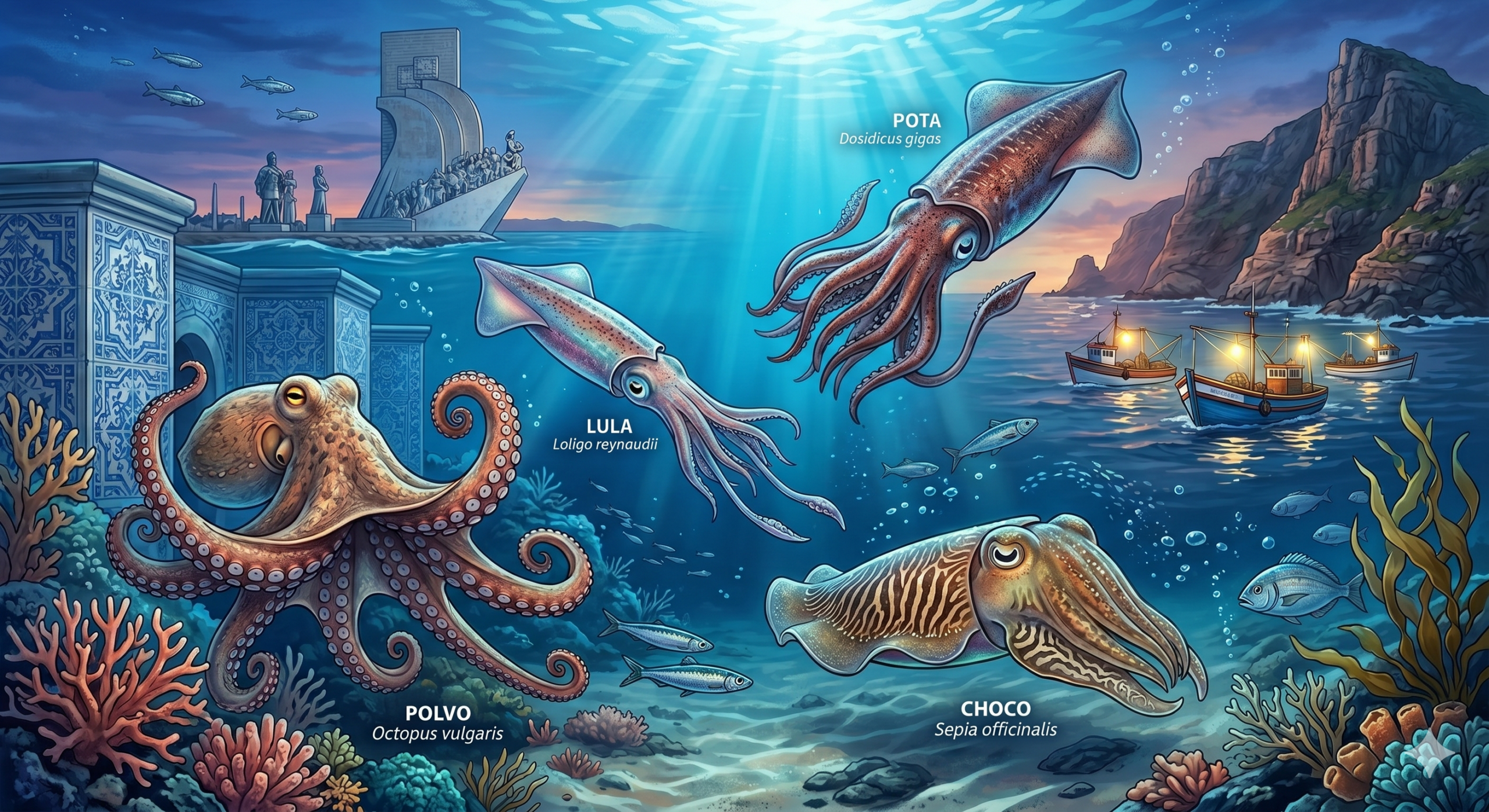
The marine ecosystems of the eastern North Atlantic Ocean and the Mediterranean basin host a profoundly rich diversity of cephalopods, specifically those belonging to the subclass Coleoidea. In Portugal, a nation characterized by a profound historical maritime heritage and possessing the highest per capita seafood consumption within the European Union, cephalopods form a foundational pillar of both artisanal fisheries and the broader gastronomic tradition. The four primary commercial and culinary categories of cephalopods within the Portuguese vernacular are polvo (octopus), lula (squid), choco (cuttlefish), and pota (flying squid or shortfin squid).
While these complex marine invertebrates share common evolutionary traits—such as strict bilateral symmetry, highly prominent heads, sophisticated central nervous systems, and modified molluscan feet that manifest as specialized, highly articulate appendages—their distinct biological morphologies dictate their varied ecological niches, the specific fishing methodologies required to harvest them, and their subsequent culinary applications. As global commercial fisheries experience a gradual, and in some regions precipitous, decline in traditional finfish and groundfish stocks, cephalopod populations have demonstrated remarkable ecological resilience and even spatial expansion. This resilience is largely attributed to their unique biological characteristics, which include exceptionally rapid growth rates, short lifespans (often restricted to a single year or two), and a robust phenotypic plasticity that allows them to adapt swiftly to changing oceanographic temperatures and environmental stressors.
This systemic ecological shift has elevated the commercial, socio-economic, and nutritional importance of species such as the common octopus (Octopus vulgaris) and the common European cuttlefish (Sepia officinalis). Consequently, the sustainable management of these populations has become a critical priority for oceanic regulatory bodies, necessitating rigorous scientific oversight to ensure the equilibrium of marine trophic webs. This report provides an exhaustive, multi-disciplinary examination of the biological distinctions, linguistic taxonomies, biochemical nutritional profiles, gastronomic chemistry, and fishery management strategies surrounding the primary cephalopod species consumed, harvested, and traded within the Portuguese sphere of influence.
Morphological Architecture and Biological Divergence
To comprehend the culinary, ecological, and commercial differences between polvo, lula, choco, and pota, it is imperative to first examine their foundational anatomical architecture. All coleoid cephalopods are defined by the possession of highly flexible appendages that extend directly from their heads, completely surrounding a chitinous, parrot-like beak. These limbs function physiologically as muscular hydrostats—complex biomechanical structures lacking any rigid skeletal support that rely entirely on the incompressible nature of internal fluids and densely packed, multi-directional muscle fibers to generate force, movement, and structural rigidity. However, the specific configuration, specialized function, and quantity of these appendages, along with significant variations in internal anatomy and sensory organs, diverge substantially across the different orders.
The Benthic Dominance of Polvo (Octopus)
Octopuses, with Octopus vulgaris serving as the most commercially and culturally relevant species in Portugal, are primarily benthic organisms. They predominantly inhabit the ocean floor, utilizing dark, rocky crevices, coral reefs, and complex topographical structures for shelter and ambush hunting. Anatomically, the octopus is immediately distinguished by a pronounced, rounded, sac-like mantle and the complete anatomical absence of tentacles; they possess exactly eight arms.
In strict scientific nomenclature, a cephalopod arm is differentiated from a tentacle by the spatial distribution of its suckers. Arms possess rows of independent, highly sensitive suckers along their entire ventral length, whereas true tentacles feature suckers exclusively at their specialized distal ends, which are known as tentacular clubs. Octopuses lack any form of internal shell or cartilaginous support structure, a profound evolutionary adaptation that grants them extraordinary flexibility and allows them to navigate and compress their entire bodies through minute physical spaces in the benthic zone, restricted only by the size of their solid beak.
The primary diet of the octopus consists of benthic crustaceans, such as crabs and lobsters. Their hunting methodology is a display of tactical precision: they envelop their crustacean prey with their flexible arms, utilize their rigid beak to pierce the tough chitinous exoskeleton, and subsequently inject a highly specialized, paralyzing venom combined with digestive saliva. This biochemical cocktail rapidly breaks down the prey’s internal tissues, which the octopus then consumes. Visually, octopuses are characterized by complex eyes featuring distinctly rectangular pupils, and their integument is equipped with millions of chromatophores that allow for instantaneous, hyper-realistic camouflage against the seafloor.
The Pelagic Agility of Lula (Squid)
Squid, encompassing species such as the European squid (Loligo vulgaris) and the veined squid (Loligo forbesii), are predominantly pelagic creatures, inhabiting the vast, open water column rather than the seafloor. They exhibit a highly streamlined, elongated, hydrodynamic body structure designed for rapid, jet-propelled continuous swimming. This morphology features a distinct triangular head and two lateral fins positioned at the top or sides of the muscular mantle, which aid in stabilization and precise maneuvering.
Unlike the eight-armed octopus, squid possess ten distinct appendages: eight arms and two highly specialized, elongated feeding tentacles. These tentacles are equipped with suckers and, in some predatory species, sharp cartilaginous hooks. The tentacles are kept tucked away and are fired forward with explosive speed to snare evasive prey—primarily shrimp and small pelagic fish—in the open water column. Once the prey is secured by the tentacular clubs, it is rapidly drawn back to the eight arms, which hold it firmly while the beak tears it into manageable chunks.
To support their elongated bodies and provide an anchor point for their powerful swimming muscles, squid rely on an internal, semi-rigid, feather-shaped cartilaginous structure called a gladius, or “pen”. In contrast to the octopus, squid possess large, highly developed eyes with circular pupils, optimized for detecting rapid movement and varying light levels in the expansive pelagic environment.
The Demersal Adaptations of Choco (Cuttlefish)
Cuttlefish, represented prominently by the European common cuttlefish (Sepia officinalis) in Iberian waters and species like the Southern African common cuttlefish (Sepia vermiculata) in the Southern Hemisphere, share a fundamental limb configuration with squid. They possess eight arms and two specialized, elongated feeding tentacles that, unlike those of the squid, can be completely retracted and hidden within specialized structural pockets located beneath their eyes when not actively hunting.
However, the body morphology of the cuttlefish is significantly broader, flatter, and more robust than that of the squid. They feature a continuous, undulating fin that runs along the entire lateral length of the mantle, allowing for highly precise, hovering locomotion near the ocean floor. The defining anatomical feature of the cuttlefish is the cuttlebone—a highly porous, calcium carbonate internal shell. This structure functions as an advanced buoyancy control mechanism; the cuttlefish actively regulates the ratio of gas and fluid within the microscopic chambers of the cuttlebone to effortlessly maintain its position in the water column without expending continuous muscular energy.
Cuttlefish are demersal organisms, meaning they live and feed near the bottom of the ocean, typically in sheltered lagoons, estuaries, and over reefs. They are globally renowned for possessing the most highly developed chromatophore networks among cephalopods, allowing them to execute instantaneous, mesmerizing changes in skin color, pattern, and physical texture for camouflage, predatory hypnosis, and complex social communication. Visually, cuttlefish possess distinctive ‘W’-shaped pupils, a highly specialized adaptation that enhances their perception of polarized light and spatial contrast.
The Robust Physiology of Pota (Flying Squid)
Within the Portuguese commercial and culinary framework, pota is a vernacular categorization applied to several species of robust ommastrephid squids, most notably the European flying squid (Todarodes sagittatus) and the broadtail shortfin squid (Illex coindetii). These species are biologically similar to lula but are typically significantly larger, possess a vastly more muscular mantle, and exhibit a much tougher tissue texture. Illex coindetii, for instance, inhabits deeper waters between 100 and 400 meters and undertakes massive daily vertical migrations, rising to the surface at night to feed.
Globally, the term pota is also heavily associated with the Humboldt squid, or jumbo flying squid (Dosidicus gigas), a massive, highly aggressive predatory species endemic to the eastern Pacific Ocean, particularly off the coasts of Peru and Chile. Dosidicus gigas represents one of the most critical commercial cephalopod fisheries worldwide. These organisms can reach staggering mantle lengths of up to 1.5 to 2 meters and weigh up to 50 kilograms. Known regionally as the “red devil” due to their aggressive pack-hunting behavior and their ability to rapidly flash their skin from deep red to white (a physiological phenomenon known as metachrosis), the Humboldt squid possesses razor-sharp beaks and tentacles lined with heavily serrated suckers. They form a crucial part of the Pacific food web, serving as the primary prey for deep-diving sperm whales (Physeter macrocephalus), which consume an estimated 6.7 to 20.1 million tonnes of Dosidicus gigas annually in the Humboldt Current alone.
Biological and Morphological Comparison Matrix
| Anatomical/Ecological Feature | Polvo (Octopus) | Lula (Squid) | Choco (Cuttlefish) | Pota (Flying Squid) |
| Primary Habitat Zone | Benthic (Seafloor crevices) | Pelagic (Open Water Column) | Demersal (Near-bottom, reefs) | Deep Pelagic (Vertical migrators) |
| Appendage Configuration | 8 Arms, 0 Tentacles | 8 Arms, 2 Tentacles | 8 Arms, 2 Retractable Tentacles | 8 Arms, 2 Tentacles |
| Sucker Distribution | Along entire length of all arms | Entire arms + distal tentacular clubs | Entire arms + distal tentacular clubs | Arms + tentacular clubs (hooks present) |
| Internal Support Structure | None (Extreme flexibility) | Chitinous Gladius (Pen) | Calcareous Cuttlebone | Robust Chitinous Gladius |
| Mantle & Fin Morphology | Rounded sac, typically lacks fins | Elongated, stabilizing top lateral fins | Broad, continuous lateral fin | Highly elongated, thick musculature |
| Ocular Pupil Shape | Rectangular | Circular | ‘W’-shaped | Circular |
Linguistic Taxonomy and Cross-Cultural Nomenclature
The rapid globalization of seafood supply chains necessitates a precise understanding of international cephalopod nomenclature, particularly between European source markets and diverse consumer demographics worldwide. A prime example of this linguistic interplay is found in the Afrikaans-speaking population in South Africa, a region that shares a deep, centuries-old maritime and exploratory connection with Portuguese navigators. The translation of cephalopod terminology reveals fascinating insights into how different cultures perceive and categorize these marine organisms based on behavior, anatomy, and acoustic phenomena.
In the Portuguese taxonomy, polvo unequivocally and exclusively refers to the octopus. The standard Afrikaans translation for octopus is seekat. This is a compound word directly inherited from the original Dutch zeekat, which translates literally to “sea cat”. This historical, somewhat poetic naming convention likely arose from early mariners observing the animal’s stealthy, solitary, benthic hunting style. Much like a feline, the octopus relies on supreme camouflage, silent stalking, and the ability to squeeze its highly flexible body through unimaginably tight crevices to ambush its prey.
For the delicate Portuguese lula (squid), the formal Afrikaans translation is inkvis (translating literally to “ink fish”). While inkvis is technically a broad umbrella term applicable to various ink-producing cephalopods, in standard South African parlance, it is most closely associated with squids. However, within South African coastal vernacular, particularly among commercial and recreational fishing communities, squid is overwhelmingly referred to as tjokka or chokka. The etymology of chokka is explicitly onomatopoeic; the term originated in the early 20th century to describe the distinct squelching, whistling, or “chocking” sound the squid makes as it forcefully expels residual water and air from its muscular siphon when it is pulled from the ocean onto the deck of a boat. In contemporary usage, the term kalamari is universally applied when the squid is processed and prepared for human consumption, while chokka is heavily utilized when the squid is discussed in the context of being used as bait for larger game fish.
The Global and Regional Nuances of Calamari (Kalamari)
To further clarify the distinction, the term “calamari” (spelled kalamari in Afrikaans) functions primarily as a culinary identifier rather than a rigid biological classification. Originating from Italian, it has been globally adopted to describe squid—specifically tender, smaller species of the Loliginidae family—that has been prepared for dining, most famously battered and deep-fried. In South Africa, the endemic Cape Hope squid (Loligo reynaudii) forms the backbone of the domestic and export kalamari industry. Because this specific species yields exceptionally tender, mildly sweet, and premium white flesh, it is highly sought after internationally. Thus, while inkvis remains the technical translation and tjokka describes the live animal or bait, kalamari is the definitive gastronomic term indicating that the squid has been expertly processed and is ready for the plate.
The Portuguese choco (cuttlefish) presents a unique linguistic overlap and slight phonetic adaptation in Afrikaans. While officially classified under the general term inkvis in modern standard Afrikaans dictionaries, cuttlefish is colloquially and frequently referred to as kattelvis. This is not an original Germanic construction but rather a direct phonetic corruption and localized adaptation of the English word “cuttlefish”. The scientific order for cuttlefish, Sepiida, yields several highly localized South African variations, such as the Southern cuttlefish (Sepia australis) and the endemic, highly camouflaged Common cuttlefish (Sepia vermiculata), which ranges from Saldanha Bay to Algoa Bay.
The term pota lacks a direct, layman equivalent in Afrikaans that is distinct from tjokka or inkvis. This is primarily because pota is a specific Iberian commercial and culinary distinction used to separate premium local squid from tougher, high-yield species, rather than a strict biological necessity in Southern African vernacular. However, when referencing the massive Humboldt squid (Dosidicus gigas), it is internationally and regionally recognized as the Jumbo flying squid or Jumbo squid.
Biochemical Composition, Nutritional Profiling, and Dietary Implications
Cephalopods represent an increasingly vital node in the calculus of global food security, offering highly bioavailable proteins with minimal lipid footprints and a substantially lower environmental impact compared to terrestrial livestock production. Furthermore, the muscular tissue of coleoid cephalopods is notably rich in long-chain omega-3 polyunsaturated fatty acids (PUFAs), though their overall absolute fat content remains exceptionally low compared to oily finfish like salmon or sardines.
When conducting a rigorous comparative analysis of the nutritional density of octopus (polvo) versus squid (lula), distinct biochemical advantages emerge depending on the specific species consumed and the dietary requirements of the consumer. Both organisms provide robust reserves of the Vitamin B complex, which is critical for central neurological function, DNA synthesis, and cellular energy metabolism, but their specific micronutrient distributions vary significantly based on their evolutionary adaptations and wild diets.
The Nutritional Superiority of Octopus (Polvo)
The muscular tissue of the octopus is exceptionally dense in Vitamin B12 (cobalamin). Nutritional analyses indicate that octopus provides an astonishing 1275% higher daily need coverage for Vitamin B12 compared to an equivalent serving of squid. Octopus also yields significantly higher concentrations of Vitamin B6 (pyridoxine)—containing approximately 0.648mg per standard metric serving compared to the 0.27mg found in squid, representing a 140% increase.
Furthermore, owing to its benthic lifestyle and diet rich in hard-shelled crustaceans, octopus meat is substantially richer in essential structural minerals. It contains 13.6% more iron (Fe) and a remarkable 69.8% more calcium (Ca) than squid. It is also highly concentrated in trace minerals like selenium, which acts as a powerful antioxidant. Notably for cardiovascular-conscious diets, octopus naturally contains 38.2% less sodium in its raw tissue than squid.
The Biochemical Profile of Squid (Lula)
Conversely, squid exhibits its own unique nutritional advantages. It possesses significantly elevated levels of Vitamin B2 (riboflavin) and is substantially richer in specific trace elements, notably containing 35% more copper (Cu) and a massive 344.7% more manganese (Mn) than octopus. Squid also contains a higher concentration of Vitamin A and, critically for commercial supply chains, demonstrates a much more stable textural and biochemical behavior during prolonged industrial freeze storage.
Studies on the lipid profiles of cephalopod musculature indicate that squid contains highly favorable ratios of mono- and polyunsaturated fatty acids, promoting cardiovascular health. Furthermore, due to their position in the pelagic water column, squids often exhibit the lowest baseline amounts of health-affecting, bioaccumulated heavy trace metals, provided they are harvested in unpolluted oceanic zones.
The Equilibrium of Cuttlefish (Choco)
Cuttlefish (choco) bridges the biochemical and textural gap between the octopus and the squid. Its tissue structure is measurably firmer than that of the squid but noticeably less dense and fibrous than that of the octopus. Nutritionally, it provides an excellent source of lean, highly digestible protein, elevated levels of Vitamin B12 for maintaining healthy nerve and blood cells, and vital macro-minerals including potassium, phosphorus, zinc, and selenium.
Comparative Nutritional Synthesis (Per 100g Equivalent Serving)
| Nutritional Metric | Octopus (Polvo) | Squid (Lula) | Cuttlefish (Choco) |
| Vitamin B12 | Exceptionally High (+1275% vs Squid) | Moderate Baseline | High |
| Vitamin B6 | High (0.648mg / +140%) | Lower (0.270mg) | Moderate |
| Sodium Content | Lower (-38.2% vs Squid) | Higher | Moderate |
| Key Mineral Advantages | High Fe (+13.6%), High Ca (+69.8%) | High Cu (+35%), High P (+107%), High Mn (+344%) | High Potassium, High Zinc |
| Lipid & Storage Profile | Very Low Fat, High Omega-3 | Highest PUFAs, Superior Freeze Stability | Low Fat, High Protein |
The Gastronomic Chemistry and Regional Culinary Traditions of Portugal
The structural biology of cephalopod muscle tissue is entirely unique within the animal kingdom, requiring highly specific culinary techniques. The arms and mantle consist of tightly interwoven helical, longitudinal, and transverse muscle fibers supported by dense, highly cross-linked collagen networks that lack bone support. If subjected to rapid, high-heat cooking for an extended duration without prior chemical or physical alteration, this collagen constricts violently. This contraction extrudes intracellular moisture, rendering the flesh practically impermeable, highly rubbery, and organoleptically unpleasant. The renowned gastronomic mastery of Portugal relies on scientifically sound, time-honored techniques to denature these proteins while perfectly preserving the structural integrity and subtle flavor profiles of the seafood.
Polvo: Cryogenic Tenderization and Coastal Dehydration
The preparation of polvo requires precise, multi-stage manipulation of its muscular hydrostat fibers. To achieve the buttery, tender texture synonymous with high-end Portuguese dining, the raw tissue must be structurally compromised prior to the application of thermal energy. Historically, fishermen achieved this by vigorously beating the octopus against rocks on the dock; however, modern culinary science discourages this, as aggressive physical flogging tears the epidermal layer and often results in an undesirable, mushy texture.
The scientifically proven, contemporary method relies on cryogenic degradation: freezing the raw octopus for 48 to 72 hours. As the intracellular water freezes, sharp ice crystals form and physically shear the dense collagen structures from within, effectively tenderizing the meat at a microscopic level. Once thawed, the octopus is meticulously cleaned and undergoes a “blanching” process known in Portugal as assustar o polvo (frightening the octopus). By gripping the head and dipping the tentacles into vigorously boiling water three to five consecutive times, the extreme external temperature shock causes the surface collagen to instantly contract. This curls the tentacles into aesthetically pleasing, tight spirals while sealing and protecting the delicate, gelatinous outer epidermal layer, preventing it from sloughing off during the subsequent long cook.
The octopus is then subjected to a prolonged, gentle simmer. The cooking liquid is often augmented with bay leaves for a deep herbal note, whole peppercorns for mild warmth, and crucially, a splash of red or white wine vinegar. The acidic nature of the vinegar actively aids in breaking down connective tissue and brightens the flavor profile. Strict thermal control is paramount during this phase; culinary researchers and top chefs note that allowing internal water temperatures to exceed 87°C (188°F) initiates a secondary protein tightening phase that irrevocably ruins the delicate texture. Sous vide preparation at 175°F for 4 to 6 hours has emerged as a highly reliable modern alternative to traditional simmering.
Once perfectly tenderized, the polvo is often finished on a high-heat grill to induce the Maillard reaction. This creates a sublime contrast between a charred, slightly smoky, crispy exterior and a supple, silky interior. This duality of texture is perfectly exemplified in polvo à lagareiro, a staple of Portuguese cuisine featuring oven-baked or heavily grilled octopus generously doused in premium local olive oil and accompanied by smashed, roasted garlic and small potatoes. Another iconic preparation is polvo guisado, a rich, slow-stewed dish where the octopus imparts its naturally briny, sweet liquor into a dense base of tomatoes, onions, and wine.
A highly distinct and historically significant regional variation is the polvo seco (sun-dried octopus) native to Nazaré. In this famous coastal town, characterized by its deep, treacherous submarine canyon and massive surf, an artisanal preservation culture persists against modernization. Local women, traditionally adorned in bulky skirts comprising seven layers of cloth, gut and meticulously suspend octopuses (alongside horse mackerel, known as carapau seco) on wooden racks along the open beach. Here, they dehydrate naturally under the intense sun and saline Atlantic winds. This ancient process drastically reduces the water activity within the tissue, completely inhibiting bacterial proliferation and allowing the high-protein food source to survive the harsh winter months when severe weather prevented small boats from navigating the ocean. To consume, the polvo seco is rehydrated, gently roasted directly over hot coals until tender, sliced into thin medallions, and dressed heavily with regional olive oil, fresh garlic, and parsley.
Choco Frito: The Setúbal Marinade Mechanism
Cuttlefish (choco) possesses a tissue structure that is firmer and more pronounced in flavor than squid, making it uniquely suited to rapid, high-heat frying—provided it is treated chemically beforehand. The undisputed epicenter of cuttlefish gastronomy in Portugal is Setúbal. Located just south of Lisbon across the Tagus river, Setúbal is historically defined by its massive canning industries and is proudly referred to as Terra de Peixe (Land of Fish). In this region, Choco Frito (Traditional Fried Cuttlefish) is not merely a recipe; it is a cultural institution, the official dish of the city, and a defining regional delicacy.
The scientific and culinary success of Choco Frito hinges entirely on a precise, two-to-four-hour acidic marinade. The fresh or fully defrosted cuttlefish is meticulously cleaned, stripped of its internal cartilage (the quill), and cleared of its ink sacs and entrails. The pristine white mantle is then sliced into uniform strips approximately two fingers thick. The strips are fully submerged in a potent emulsion of fresh lemon juice (including the squeezed rinds), crushed garlic cloves, whole bay leaves, salt, and pepper. The low pH of the citric acid gently denatures the surface proteins of the cuttlefish, essentially “cooking” it chemically (akin to the mechanism of a ceviche) and breaking down the outer stiffness of the mantle. However, timing is critical; under-marinating results in a flavorless product, while over-marinating causes excessive proteolysis, turning the flesh overly soft and structurally unstable.
Following the marinade, surface moisture must be carefully modulated. The strips are patted dry to a specific dampness that allows the coating to adhere perfectly without coagulating into a heavy paste. Crucially, authentic Setúbal recipes strictly mandate the use of fine corn flour (farinha de milho) rather than standard wheat flour. Corn flour lacks gluten network-forming proteins, meaning it absorbs significantly less oil and fries to a distinctively shattering, golden-brown crust when introduced to frying oil heated to exactly 176ºC (350ºF). The rapid heat transfer cooks the cuttlefish in mere minutes, ensuring a succulent, chunky interior perfectly protected by a rigid exterior crust. Nutritionally dense, a standard serving contains approximately 1370 calories, 95g of fat, and 115g of protein, and is traditionally served alongside thick-cut fries, a fresh salad, or lemon wedges. Cuttlefish is also the star of arroz de choco, a deeply savory, ink-stained rice dish that utilizes the animal’s natural ink sacs to flavor and color the broth.
Lula vs. Pota: Culinary Substitution and Gastronomic Identity
Squid (lula) boasts the most tender, delicate texture of the commercial cephalopods and a mild, subtly sweet flavor profile that easily absorbs aromatics. It is highly versatile and is commonly enjoyed quickly pan-fried as lulas à doré (golden-fried squid rings) or slow-cooked in rich, complex seafood stews known as caldeirada de lulas.
In the sun-drenched southern Algarve region, the delicate squid forms the basis of Lulas recheadas à Algarvia (Algarve-style stuffed squid). This traditional preparation brilliantly utilizes the intact squid mantle as a biological casing. The casing is meticulously stuffed with a rich, pan-fried farce composed of the animal’s own finely chopped tentacles and heads, highly spiced local linguiça (smoked sausage), ripe tomatoes, garlic, onions, and white wine. Once stuffed, the mantle is sealed with a simple toothpick, briefly fried in olive oil to set the exterior, and then returned to the rich tomato sauce to slowly braise for 15 minutes. The gentle stewing process ensures the mantle remains incredibly tender while absorbing the savory, smoky compounds of the meat stuffing.
However, within the broader commercial market and restaurant industry, lula is frequently conflated with pota. Because pota (such as the European flying squid or the imported Jumbo flying squid) features a substantially thicker, highly muscular mantle designed for aggressive pelagic swimming, it is inherently tougher, less delicate, and requires more aggressive tenderization. In Portugal, pota is explicitly utilized as a high-yield, budget-friendly alternative for cost-effective meals.
Due to their visual similarities once heavily processed, sliced into rings, or heavily battered, pota is frequently the subject of seafood mislabeling and economic fraud. Detailed studies and consumer watchdogs analyzing seafood supply chains have noted pervasive mislabeling issues; globally, testing has shown that up to 1 in 5 seafood labels are incorrect. Consumers often pay a premium for what is advertised on menus as premium lula, but are actually served the vastly cheaper, tougher pota. To combat this, proper commercial labeling guidelines in Portugal strictly dictate that the origin and exact species of pota must be explicitly declared on primary ingredients to prevent consumer deception.
Ecological Dynamics, Fisheries Management, and Commercial Integrity
The heavy reliance on cephalopods as a primary protein source requires robust, highly regulated ecosystem management, particularly given the intense environmental and commercial pressures exerted on the Iberian coastline. Cephalopods are highly responsive to oceanographic variables, and their population biomass can fluctuate dramatically based on environmental influences such as water temperature, salinity, and oceanic circulation patterns.
Trophic Dynamics and Reproductive Seasonality
Cephalopods act as crucial mid-trophic nodes in the marine food web. They are voracious, aggressive predators of crustaceans and small teleost fishes, exerting significant top-down control on local benthic and pelagic populations. Simultaneously, they serve as a primary, energy-dense prey source for marine apex predators, including sperm whales, dolphins, and deep-water sharks. The European flying squid (Illex coindetii), for example, performs massive daily vertical migrations in the water column, effectively transferring immense amounts of energy from the deep mesopelagic zone to surface waters.
Reproductive success in Portuguese waters is intrinsically linked to seasonal coastal upwelling events, where cold, nutrient-dense water from the deep ocean rises to the surface, triggering massive phytoplankton blooms that support the entire trophic pyramid. For the common octopus (Octopus vulgaris), distinct seasonal spawning peaks occur depending on exact latitude. The northwest coastal population exhibits a primary spawning event from March to July, directly synchronized with the spring upwelling season. Conversely, the southern Algarve population spawns slightly later, peaking between August and September. Following these events, the autumn recruitment pulse introduces a massive influx of juvenile cephalopods into the benthic ecosystem, replenishing the stock. For cuttlefish, the peak fishing season aligns with the warming waters of spring (April to June), where they migrate closer to the coast, estuaries, and rocky areas to feed and spawn, becoming highly active at dawn and during the night. Octopus fishing intensifies heavily again in the fall (October to December) as cooling waters prompt the species to return to accessible coastal zones.
Regulatory Frameworks and The Defeso Period
Fishery operations targeting cephalopods in Portugal—ranging from traditional, small-scale artisanal fleets utilizing specific pots and traps targeting octopus, to large, multi-species bottom trawlers targeting squid and cuttlefish—are tightly monitored by national governmental entities. The primary regulatory bodies are the Directorate-General for Natural Resources, Safety and Maritime Services (DGRM) and the Portuguese Institute for Sea and Atmosphere (IPMA). IPMA is tasked with rigorously assessing stock exploitation states through sophisticated bottom trawl surveys (such as the 4thQ PGFS) and detailed commercial logbook data. Data collection aligns closely with the EU’s Common Fisheries Policy and the Data Collection Framework (DCF) to monitor fleet dynamics and species composition.
To counter the constant threat of overfishing, protect the critical biological cycle, and ensure the sustainability of the common octopus, the Portuguese government enforces a strict, legally mandated closed season known as the defeso. This policy mandates the absolute temporary suspension of all directed octopus fishing within specified zones to ensure the unhindered renewal of the biomass and the protection of juveniles. Specifically, in the Zona Ocidental Norte (Northern Occidental Zone, spanning from the northern border to the Figueira da Foz captaincy), the defeso is strictly enforced from July 17 to August 15.
The scientific and ecological efficacy of the defeso relies not merely on fishing vessels remaining docked in port, but critically on the mandatory physical extraction of all passive fishing gear from the ocean floor. Armadores (shipowners) must physically remove all pots and traps by the end of July. If gear is abandoned, a phenomenon known as “ghost fishing” occurs, where the submerged traps continue to passively capture, trap, and kill cephalopods, entirely negating the conservation benefits of the seasonal closure and decimating local micro-populations. To ruthlessly enforce this, maritime authorities launch directed, large-scale inspection operations starting in early August to actively locate, drag for, and confiscate unclaimed or abandoned gear. To mitigate the economic impact on the fishing communities, the government compensates highly compliant fishers through European structural financial funds, such as the Programa Mar 2030.
Ecological Challenges: Bycatch and Marine Pollution
While overall cephalopod populations in Portuguese waters are generally considered to be in a relatively healthy status without marked abnormal fluctuations outside of natural migratory behaviors, localized anthropogenic pressures and technological challenges persist. Heavy bottom trawling operations off the Portuguese coast, which frequently target schooling species like Illex coindetii and Loligo vulgaris, suffer from varying degrees of bycatch and discard issues. This necessitates ongoing technological research into trawl codend selectivity, aiming to design nets that specifically allow undersized juvenile cephalopods and unintended finfish to escape unharmed, thereby complying with EU discard bans.
Furthermore, historical environmental chemical pollution continues to pose localized, long-term threats to the near-shore ecosystems that support benthic cephalopods. Extensive biomonitoring programs utilizing marine gastropods (such as Nucella lapillus) along the Portuguese coastline have continuously tracked the dark legacy of Tributyltin (TBT) pollution. TBT is a highly toxic, synthetic anti-fouling compound that was previously applied to the hulls of commercial ships to prevent barnacle growth. While currently strictly banned by the EU, the extreme persistence of TBT in marine sediments continues to disrupt the endocrine and reproductive systems of benthic invertebrates, inducing imposex in gastropods and highlighting the extreme fragility of the near-shore coastal ecosystems upon which the octopus and cuttlefish rely for spawning and feeding.
Despite these ongoing environmental and technological challenges, cephalopod fisheries remain a highly viable, scientifically sound path toward long-term marine sustainability when managed through strict dynamic quotas, heavily enforced seasonal closures like the defeso, and international sustainability certification schemes. Their inherently rapid generational turnover allows cephalopod populations to recover from heavy exploitation far faster than slow-growing, long-lived finfish, providing a vital economic, cultural, and nutritional buffer for coastal Portuguese communities in an era characterized by immense climatic uncertainty and shifting oceanic paradigms.