

Last Updated on 1 May 2026 by Adrienne
Shellfish in Portuguese Cuisine
Shellfish, harvested from Portugal’s rocky shores, estuaries, and deep Atlantic waters, bring delicate textures and sweet, briny flavors to the table. They’re often served fresh with minimal fuss—or cleverly integrated into hearty stews—to let their natural taste shine.
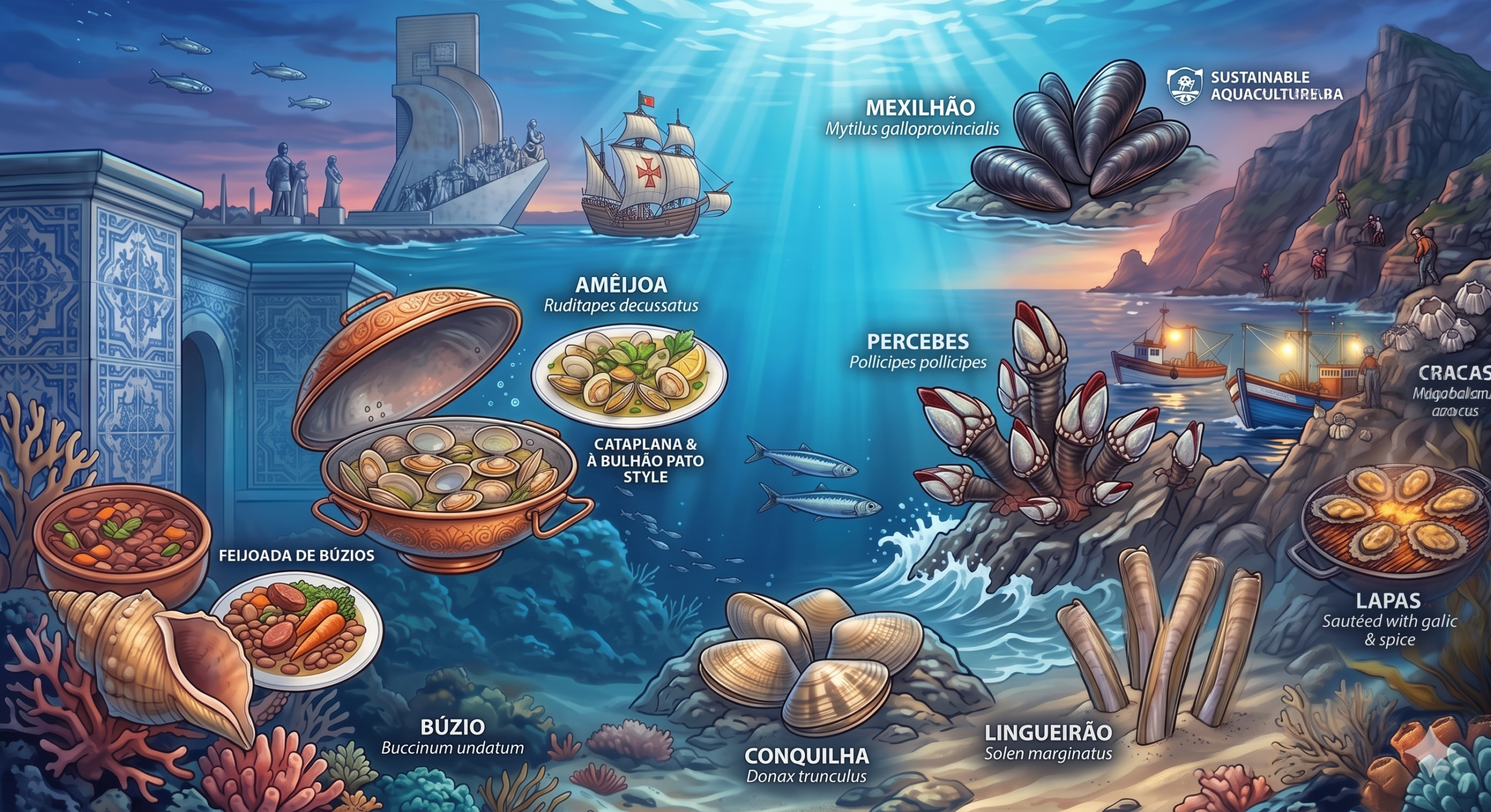
Amêijoa (Clam): These small, tender clams (most notably the grooved carpet shell, or Ruditapes decussatus) have smooth shells and a sweet, slightly chewy texture. Their mild, oceanic flavor pairs perfectly with garlic and herbs. Clams are steamed, sautéed, or added to stews, often with white wine. A culinary masterpiece is Amêijoas à Bulhão Pato, named after a 19th-century poet, featuring clams in a vibrant sauce of olive oil, garlic, lemon juice, and fresh cilantro. They are also a key ingredient in the famous Carne de Porco à Alentejana (a pork and clam surf-and-turf) and the traditional clam-shaped copper pot stew known as the Cataplana.
Mexilhão (Mussel): Mussels are dark-shelled with plump, juicy flesh and a subtle, briny sweetness. They are highly abundant along Portugal’s rocky coast and are also sustainably farmed in local aquaculture. Steamed or cooked in broth, they readily soak up flavors like tomato or wine. Try Mexilhões à marinheiro (mussels in a tomato and garlic sauce) or the Aveiro specialty Mexilhões com molho verde, which features boiled mussels dressed in a tangy vinegar, olive oil, onion, and parsley sauce. They are also an essential component in a rich Arroz de Marisco (seafood rice).
Percebes (Goose Barnacles): Arguably Portugal’s most bizarre-looking yet highly prized seafood, percebes resemble tiny dinosaur claws or a goose’s neck. Harvesting them is a highly dangerous profession, as they grow on jagged, wave-battered cliffs in the crashing intertidal zone. To eat them, they are simply boiled for a few minutes in seawater to preserve their pure, concentrated ocean flavor. You peel back the tough, leathery outer skin and eat the tender, sweet inner flesh.
Conquilha / Cadelinha (Wedge Clam): These tiny, beautifully patterned clams (Donax trunculus) are typically found buried just beneath the sand at the water’s edge, particularly in the sunny Algarve region. Because of their small size, they cook incredibly fast and are famously prepared as Conquilhas à Algarvia—sautéed quickly in olive oil, garlic, and coriander, and finished with a squeeze of fresh lemon juice.
Lingueirão / Navalha (Razor Clam): Named for their resemblance to an old-fashioned straight razor (navalha), these long, skinny clams burrow vertically into the sand. They yield a sweet, delicate meat that shines brilliantly in Arroz de Lingueirão, a flavorful, brothy rice dish heavily seasoned with garlic, tomatoes, peppers, and fresh coriander, originating from the Algarve.
Búzio (Whelk): A type of large sea snail, the búzio has a firm, meaty texture that holds up brilliantly to slow cooking. The most iconic preparation is Feijoada de Búzios, a coastal twist on the traditional Portuguese bean stew. The whelks are slow-cooked with white or red beans, carrots, tomatoes, and often smoky chouriço or bacon, resulting in a rich, hearty, and deeply comforting dish.
Cracas and Lapas (Azorean Barnacles and Limpets): If you visit the Azores archipelago, you will encounter these two endemic island specialties. Cracas are a local barnacle that grows directly into volcanic rock; whole chunks of the rock are boiled in saltwater, chilled, and served to the table, offering a flavor described as a pure mix of crab and oyster. Lapas (limpets) are pungent, flat-shelled mollusks that are typically served sizzling hot straight from the grill, drenched in minced garlic, butter, and spicy local pepper sauce.