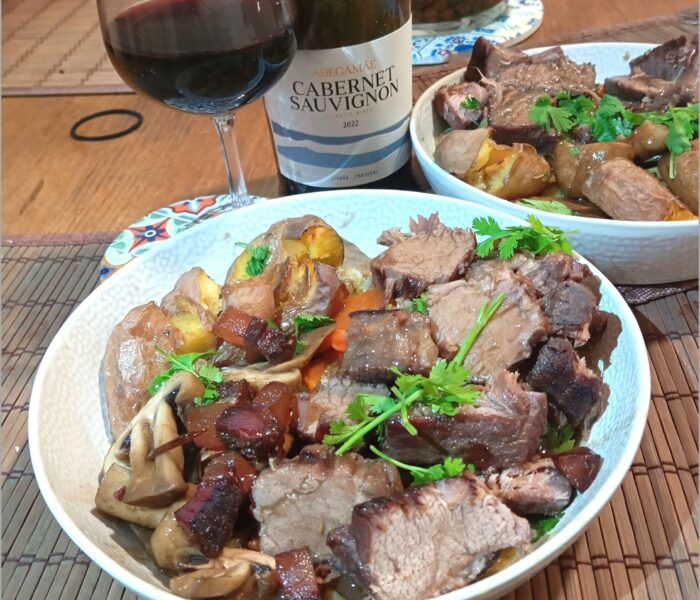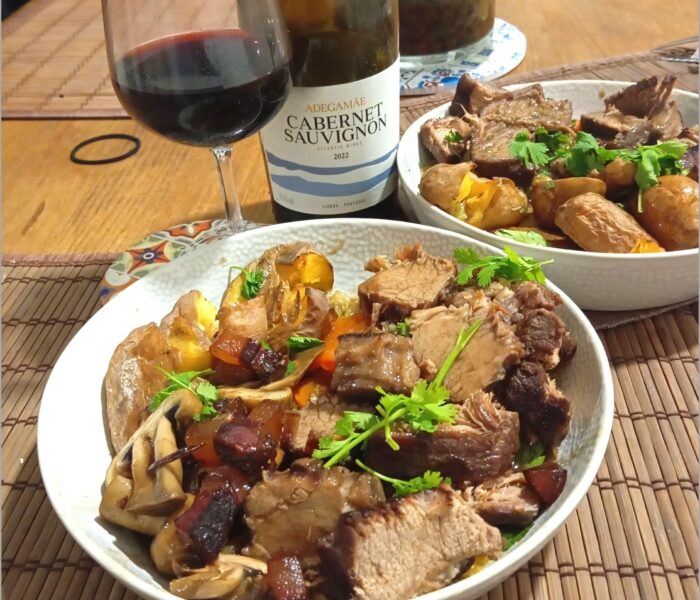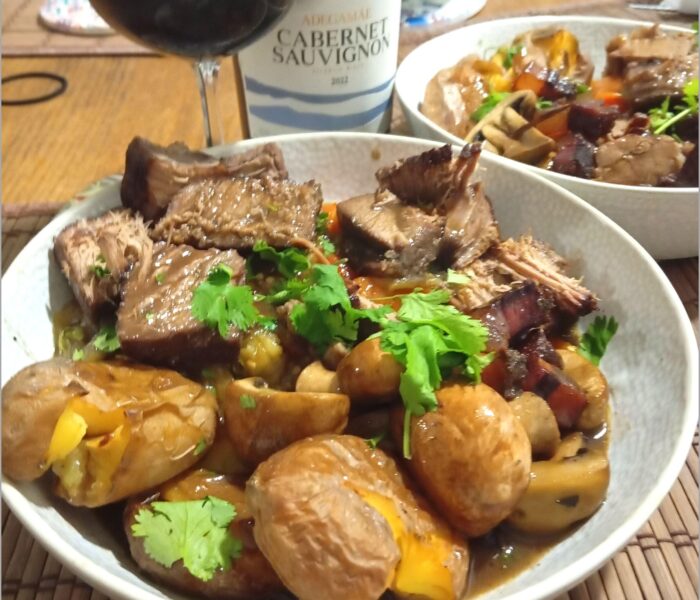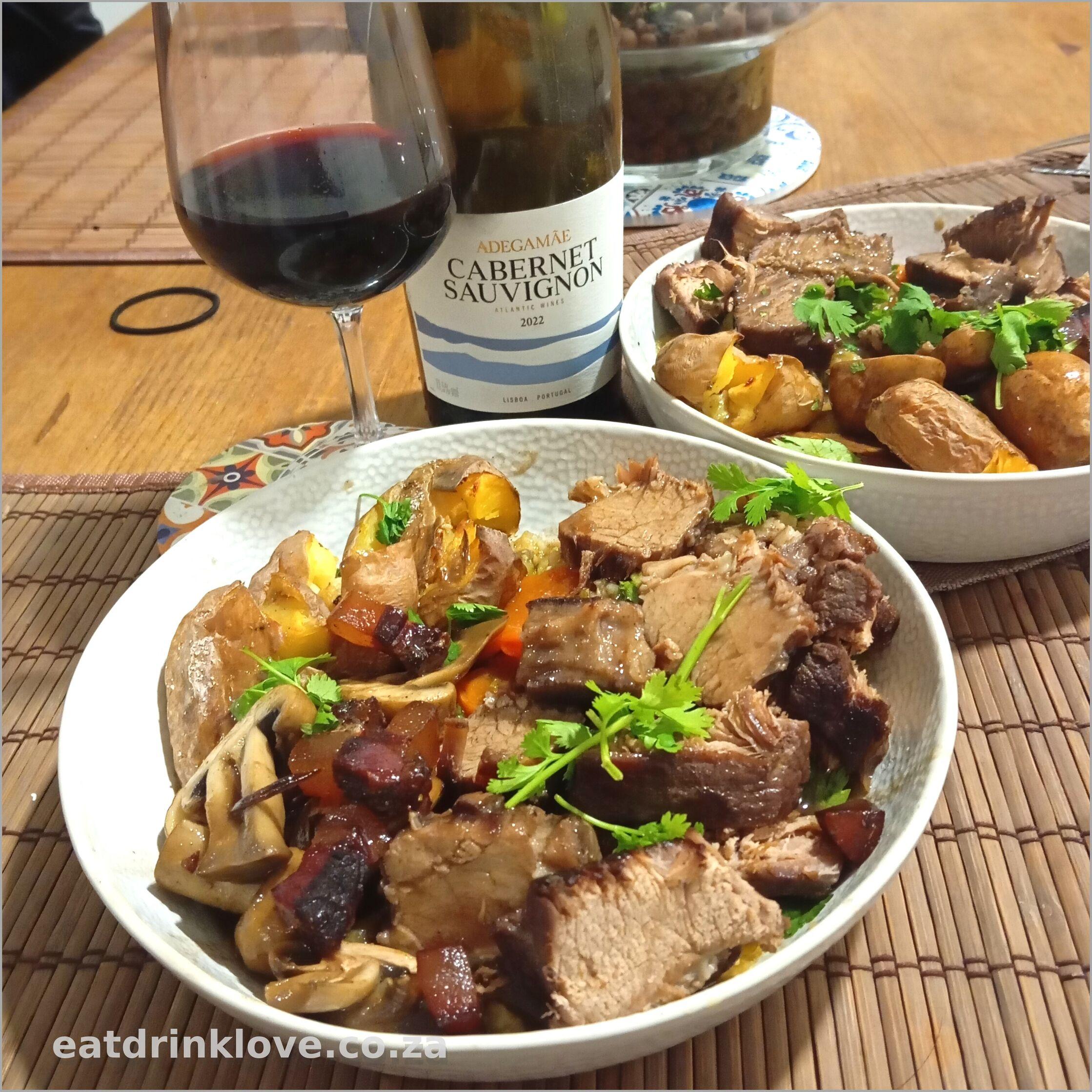

As the Atlantic winds pick up and the evenings grow noticeably cooler, the culinary shift from light summer seafood to deep, comforting winter fare becomes a necessity. Beef short ribs are the ultimate cold-weather cut—heavily marbled and dense—but they demand time and respect to unlock their full potential. This recipe bridges the precision of modern indoor cooking with the raw, smoky appeal of an outdoor braai.
By utilizing the sous vide method, we bypass the guesswork and moisture loss of traditional braising. A 20-hour water bath gently melts the tough connective tissue into rich gelatin, yielding meat that is exceptionally tender while still holding its structural integrity perfectly for a final, aggressive sear. But the real magic happens inside the bag. Instead of drowning the beef in liquid, we introduce a highly concentrated, heavily reduced red wine and beef stock syrup. This ensures the meat absorbs the robust aromatics rather than leaching its own savoury juices into a watery void.
To cut through the sheer richness of the beef and its accompanying guanciale and mushroom pan glaze, the side dishes have to do some heavy lifting. Blistered, smashed potatoes hit with a sharp douse of vinegar provide necessary acidity and crunch. Alongside them, a warm, fire-roasted aubergine and pepper salad—charred directly over the braai coals—adds a layer of smoky depth that grounds the entire plate.
The Beef & Wine Concentrate
- 1.2kg – 1.5kg short rib blocks (4–5 cm thick)
- 100ml robust red wine (a Portuguese Touriga Nacional works perfectly here)
- 100ml quality, unsalted beef stock
- 3 sprigs fresh rosemary
- 3 sprigs fresh thyme
- 4 cloves garlic, smashed
- ½ tsp brown sugar (optional)
- 150g guanciale or thick bacon, cubed in 1cm pieces
- 200g brown mushrooms, cleaned and halved
- Coarse salt
Warm Charred Aubergine & Pepper Salad
- 2 large aubergines
- 2 large red bell peppers
- 4 cloves garlic, finely minced
- 2 Tbsp red wine vinegar
- 3 Tbsp extra virgin olive oil
- 1 tsp salt
- Fresh coriander or parsley, chopped
The Vinegar-Blistered Potatoes
- 500g baby potatoes
- Olive oil & coarse salt
- 2 Tbsp white wine vinegar
Phase 1: The Concentrate & The Bath (18 to 24 Hours Prior)
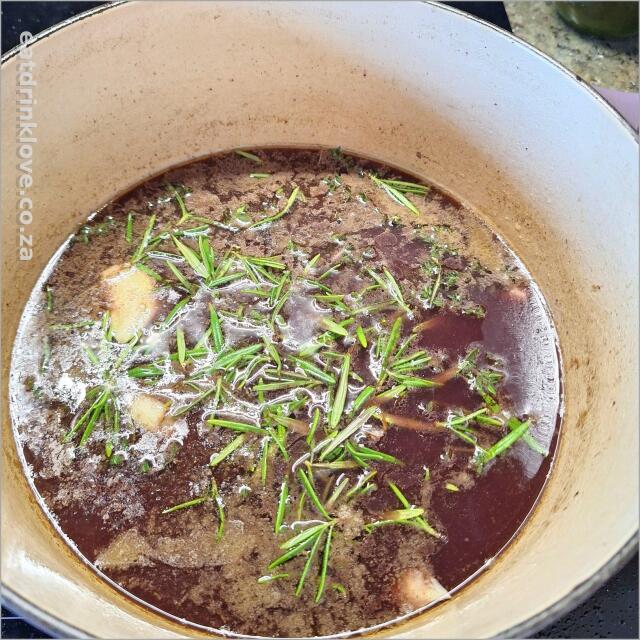
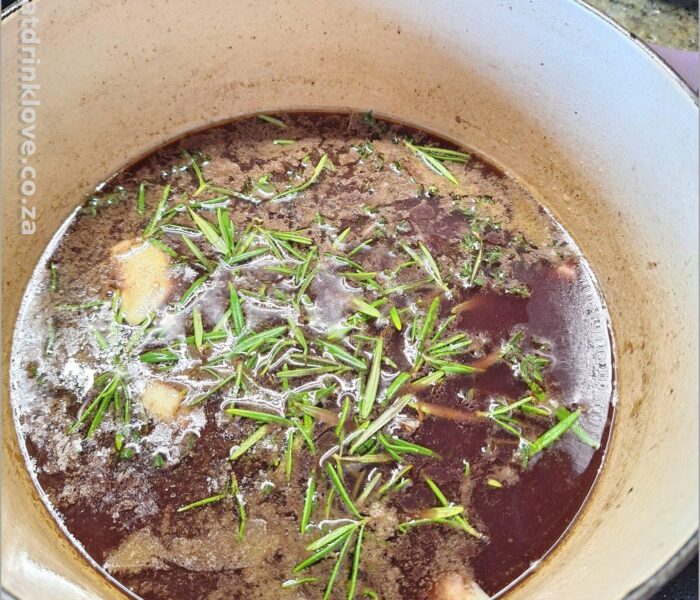
- Reduce the Liquid: Pour the red wine and stock into a small saucepan with the rosemary, thyme, smashed garlic and sugar (optional). Boil aggressively until the volume is reduced by half and you can no longer smell alcohol vapour. Let it cool completely.
- Seal: Season the short ribs generously with salt. Place them in the bag along with the cooled liquid syrup and the herbs. Vacuum seal (or use a ziplock bag with the excessive air removed).
- Submerge: Cook in a 70°C water bath for 20 hours. Because the temperature is higher, ensure your container is well-covered to prevent water evaporation.
Phase 2: The Fire-Roasted Salad (1 Hour Before Serving)
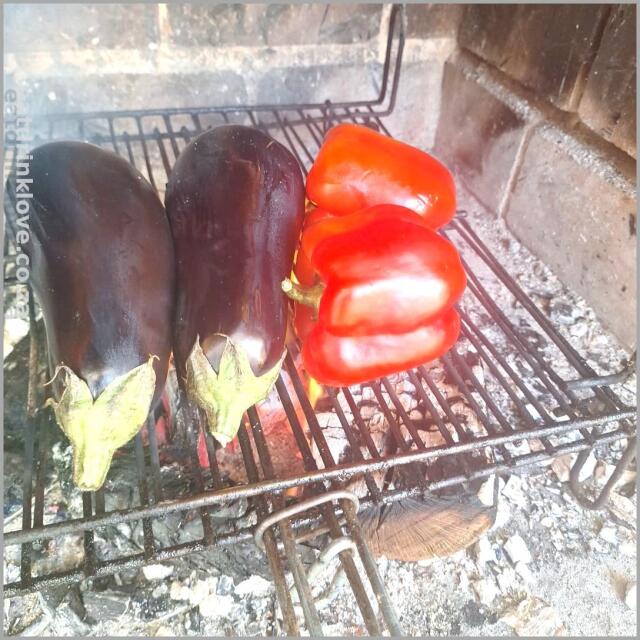
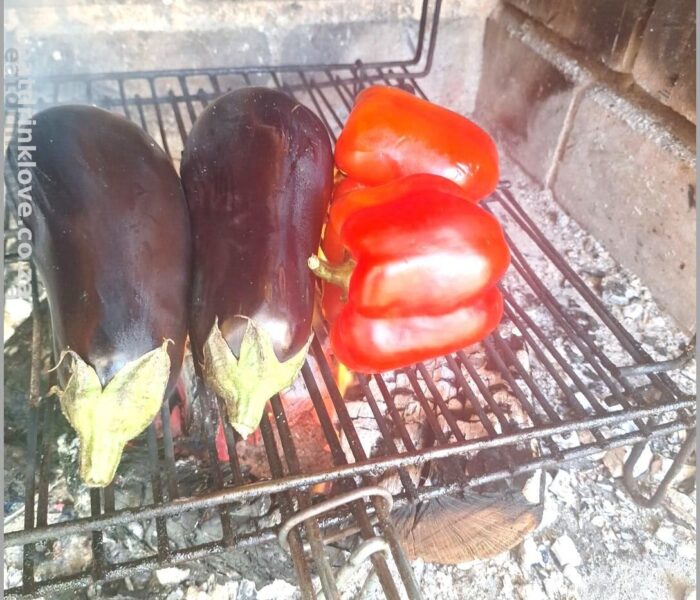
- Char: Place the whole aubergines and bell peppers directly over a gas flame, a hot braai grill, or under an oven broiler. Turn them until the skins are completely blackened and blistered, and the flesh collapses.
- Steam and Strip: Throw the charred vegetables into a bowl and cover with a plate for 10 minutes. The trapped steam loosens the skins. Peel off the blackened skins, discard the pepper seeds, and tear the warm flesh into long strips.
- Dress: While still warm, toss the torn vegetables with the minced garlic, olive oil, red wine vinegar, fresh herbs and salt. The warm flesh will absorb the oil and vinegar like a sponge. Set aside at room temperature.
Phase 3: The Potatoes (45 Minutes Before)
- Parboil & Smash: Boil the potatoes until knife-tender, let them steam dry for 5 minutes, toss in oil, and smash flat on a baking tray.
- Roast & Hit with Acid: Roast at 220°C (430°F) for 20-25 minutes until shattered and crisp. Douse evenly with the white wine vinegar immediately upon removing from the oven, and finish with coarse salt.
Phase 4: The Sear and The Sauce
- Careful Handling: At 74°C, the meat is highly fragile. Pull the bags from the bath and carefully remove the ribs. Pat them entirely dry. Do not discard the liquid.
- Render the Guanciale or Bacon: In a heavy frying-pan, over low to medium heat, render the fat out of the guanciale or bacon for about 5 minutes. Add the mushrooms and sauté for another 5 minutes. Remove the meat and mushrooms and set aside.
- The Quick Sear: Get the same frying-pan smoking hot. Sear the ribs for barely 45–60 seconds per side just to build a crust, handling them gently with tongs so they don’t fall apart. Remove and tent with foil.
- The Red Wine Pan Sauce: Strain the leftover bag juices—which are now infused with beef gelatin, reduced wine, and herbs—directly into the hot frying-pan. Boil aggressively for 2 to 3 minutes until it reduces to a thick glaze. Add the mushrooms and guanciale / bacon and cook for another 5 minutes. Off the heat, swirl in a knob of cold butter to emulsify.
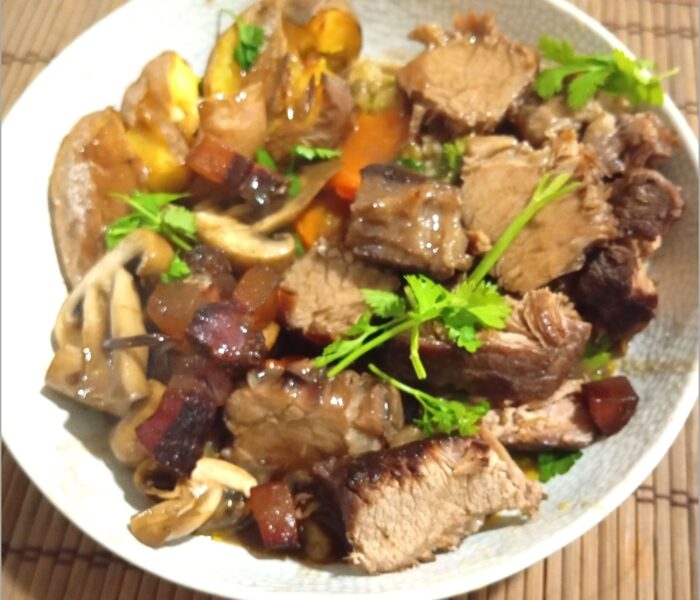
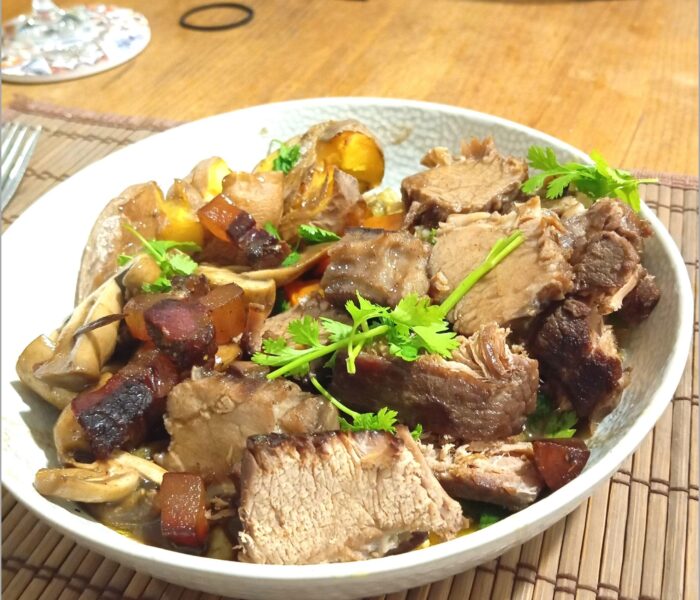
- Plate: Serve the hot, tender ribs over the warm roasted vegetable salad, spoon the rich mushrooms sauce over the beef, and plate the blistered potatoes on the side.
Liquid and Sous Vide
The Golden Rule of Sous Vide Alcohol: You cannot pour raw wine into a vacuum bag. Alcohol vaporizes at a lower temperature than water; under vacuum heat, raw wine will balloon the bag, prevent even cooking, and infuse the meat with a harsh, metallic ethanol flavour. You must boil the alcohol off completely before it goes into the bag.
When you seal meat in a bag with a large volume of liquid, the laws of diffusion and equilibrium take over. The water-soluble flavour compounds inside the beef—salts, sugars, and savoury amino acids—will leach out of the meat and into the surrounding liquid until both the meat and the liquid have the exact same concentration of flavour.
Just as you strictly control the liquid level in a potjiekos so the meat braises in a rich, concentrated base rather than boiling its flavour out into a weak soup, a sous vide bag demands the exact same discipline on a micro scale. If the meat is swimming in liquid, it is essentially boiling. You end up with incredibly flavourful bag juice and highly diluted, bland beef.
While there isn’t a strict mathematical equation, the industry standard relies on three structural rules for adding liquid to a vacuum bag:
- The 1-to-2 Tablespoon Rule: You only need enough liquid to barely coat the surface of the meat. For a standard 400g–500g short rib block, 15ml to 30ml (1 to 2 tablespoons) of liquid is the absolute maximum.
- The Concentration Rule: Any liquid that goes into the bag must be aggressively reduced first. This is why the recipe requires boiling the red wine down to a thick syrup. If the liquid in the bag is more concentrated than the meat’s internal juices, the meat will absorb flavour rather than losing it to the bag.
- The Fat Trap (The Butter Myth): Never put raw butter or large amounts of oil in the bag with a steak or short rib. Many of the best flavour compounds in beef, as well as the essential oils in aromatics like rosemary and thyme, are fat-soluble. If you put a knob of butter in the bag, it will melt, extract those fat-soluble flavours right out of the meat, and trap them in the bag liquid.