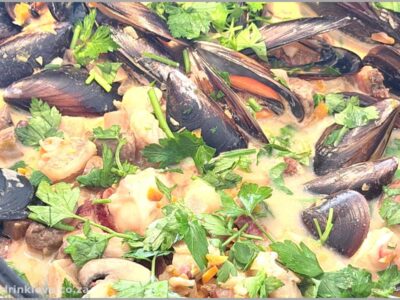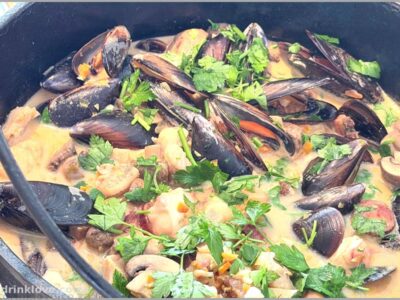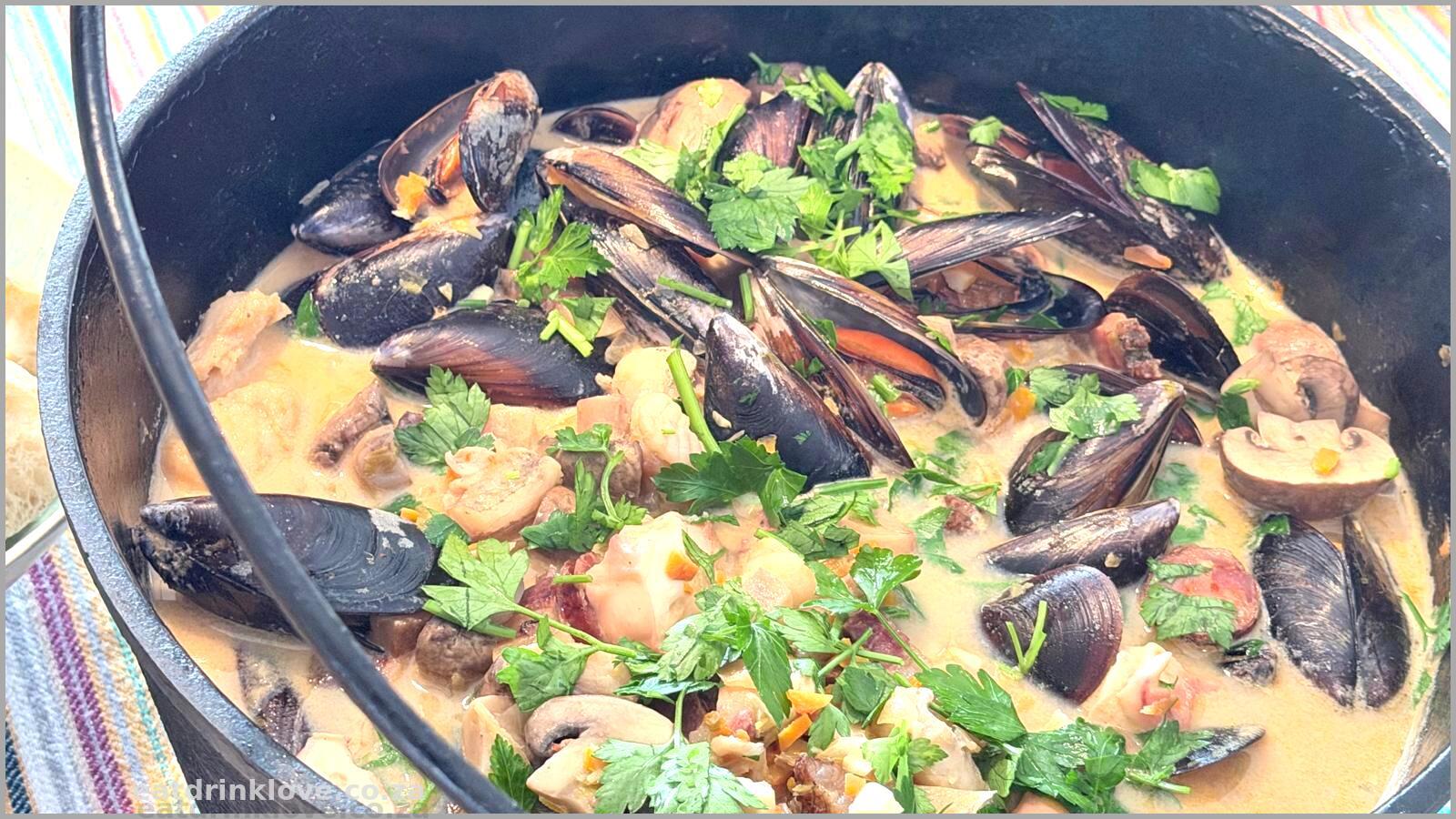

Back in August 2018, I shared a recipe for an Easy Black Mussel and White Wine Potjie. It was a fantastic, fuss-free starter that leaned on sweet white wine and a dollop of apricot jam to create a rich, crowd-pleasing sauce with frozen mixed seafood.
But a lot has changed in my kitchen since then.
Living here on the Silver Coast of Portugal has completely transformed how I approach seafood and flavor building. Surrounded by world-class Atlantic ingredients and deeply traditional coastal cooking techniques, I knew it was time to revisit that old favorite and give it the serious upgrade it deserves.
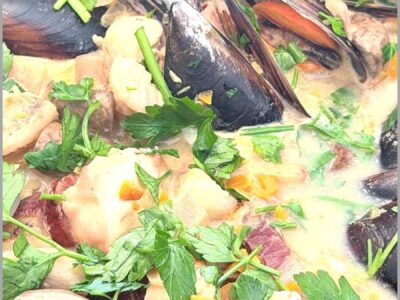
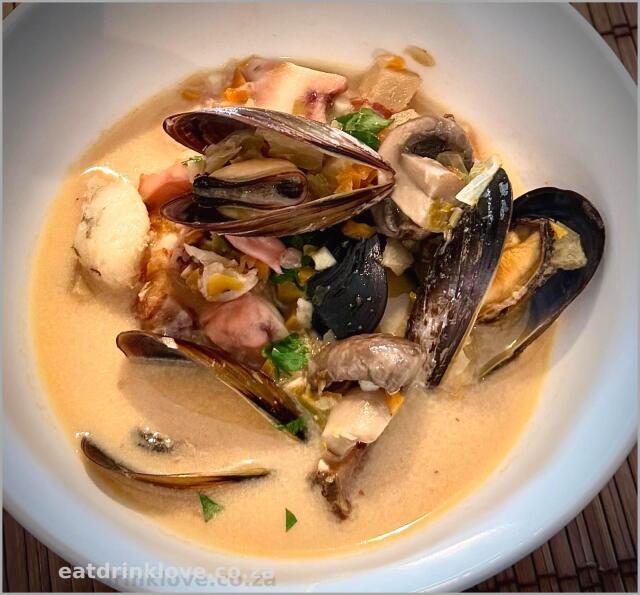
This new version isn’t just a quick starter anymore—it is a highly refined, show-stopping main course. We’ve completely ditched the frozen seafood mix in favour of meaty monkfish (tamboril) and incredibly tender, slow-braised flying squid (pota). The sweet wine and apricot jam have been replaced by a crisp, dry Portuguese white, anchored by a deeply savoury base of rendered guanciale (or chouriço) and massa de pimentão (fermented red pepper paste).
It requires a bit more technique than the 2018 version—including staggered cooking times to ensure every protein is cooked to perfection—but the result is a velvety, sunset-orange seafood stew that perfectly bridges South African outdoor potjiekos culture with authentic Portuguese coastal heritage.
Make It Your Own: Easy Ingredient Swaps
The beauty of a seafood potjie is its versatility. While I use specific cuts based on what I cure at home and what I find fresh here on the Silver Coast, you can easily adapt this to your local supermarket.
- The Pork Base: I love starting this potjie by rendering down my homemade guanciale—the cured pork jowl melts into the mirepoix and gives the sauce an incredible, velvety texture. If you don’t make your own charcuterie, you can absolutely substitute it with Portuguese chouriço for a smokier, paprika-forward flavour, or simply use thick-cut streaky bacon (or a combination)
- The White Fish: I use Monkfish (tamboril) because it is incredibly meaty and holds its shape perfectly in a bubbling stew without disintegrating. If you can’t find monkfish, Kingklip is a brilliant South African alternative. Otherwise, any very firm, thick white fish will work.
- The Squid & The Stock: I use pota (flying squid), which requires a long, slow pre-braise in a master stock to become tender. I then use that deeply flavoured master stock in the potjie. If you want a shortcut, swap the pota for standard calamari rings (which cook in just 5 minutes alongside the mussels) and use a high-quality, store-bought fish or chicken stock for the liquid base.
The Ingredients
The Proteins
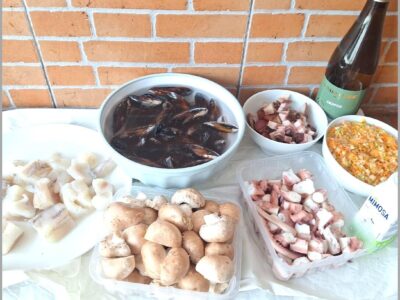
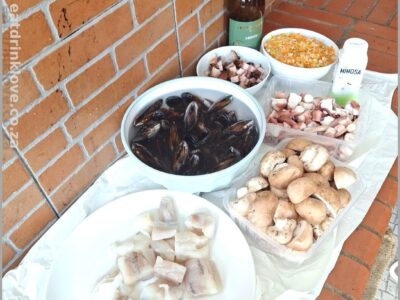
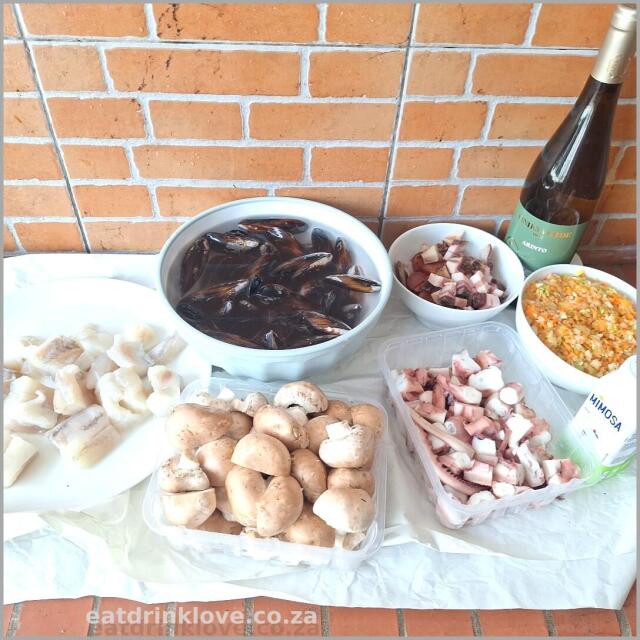
- 1.5 kg Fresh Black Mussels, cleaned and de-bearded
- 500g Monkfish (Tamboril), cut into bite-sized chunks
- 400g Pota (Flying Squid) tentacles
- 150g Guanciale (or Chouriço or thick bacon), cubed (1cm)
The Enhanced Base & Liquids
- The Mirepoix: 1 large onion, 2 medium carrots, and 2 celery stalks (finely diced)
- 300g Brown Mushrooms, quartered or thickly sliced
- 1 Large Garlic Bulb, finely chopped (split: half for stock, half for the potjie)
- 2 tsp Tomato Paste
- 2 tsp Massa de Pimentão (Portuguese red pepper paste, optional but highly recommended)
- 1 Tbsp Apricot Jam (optional)
- 500ml Dry White Wine (like an Arinto)
- 500ml Chicken Stock (used to build the pota master stock)
- 250ml Fresh Cream
- Whole Black Peppercorns, 2 Bay Leaves, and 1 Extra Roughly Chopped Onion (for the master stock reduction)
The Method
1.The Pota & Allium Master Stock:Building the concentrated seafood essence..
In a separate pot, bring the 500ml chicken stock to a simmer with a handful of whole black peppercorns and the 2 bay leaves. Add the pota and simmer gently for 40-50 minutes until tender.
Once tender, remove the pota with a slotted spoon and immediately plunge the pieces into a bowl of cold water to halt the cooking process and lock the texture. Drain, cut into large chunks (about 2cm) and set aside.
Add the roughly chopped onion and half of your chopped garlic directly into the remaining hot stock. Boil vigorously to reduce the liquid, concentrating the allium and cephalopod flavours, until you are left with about 250ml of rich, potent master stock. Strain to remove the solids and reserve the liquid.
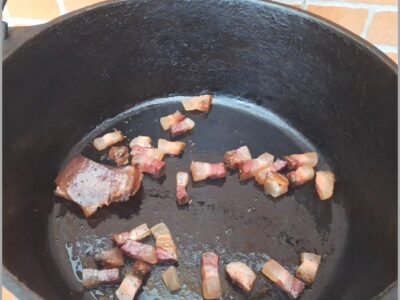
2.Render the Guanciale:Place your potjie over the coals. Add the 150g diced guanciale and fry in its own fat for 5 minutes until crispy.
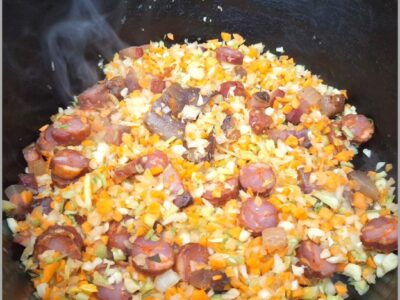
3.Sauté the Veg & Caramelise the Pastes: Add the mirepoix (finely diced onion, carrots, celery) to the pork fat and sauté for 10 minutes until soft.
Clear a small hot spot in the centre. Drop in the 2 tsp tomato paste, 2 tsp massa de pimentão, and the remaining chopped garlic. Stir the pastes directly on the hot iron for 2 minutes to caramelise them, then mix through the vegetables.
4.Wine & Master Stock:Deglaze the caramelised sugars..
Pour in the 500ml dry white wine. It will immediately turn a rich reddish-orange. Boil aggressively for 5 minutes to reduce by half. Pour in your 250ml strained, concentrated pota master stock with the apricot jam (optional) and simmer gently for 10 minutes.
5.Poach the Fish, Pota & Mushrooms: Stir in the 250ml fresh cream. Drop in your monkfish chunks, the chilled pota pieces, and the quartered brown mushrooms. Keep the simmer very gentle and cook for 10 minutes. The monkfish will cook through, and the mushrooms will soften slightly while retaining their meaty bite.
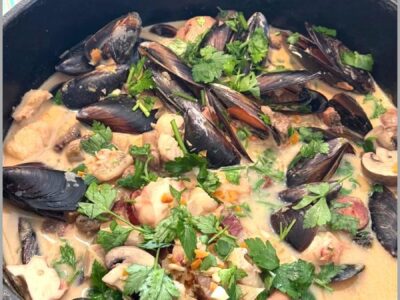
6.Steam the Mussels: Drop the 1.5kg of cleaned mussels over the top of the stew. Put the lid on and let the potjie steam for about 5 minutes.
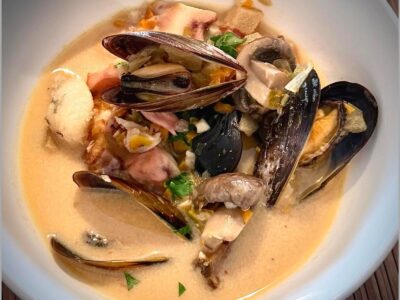
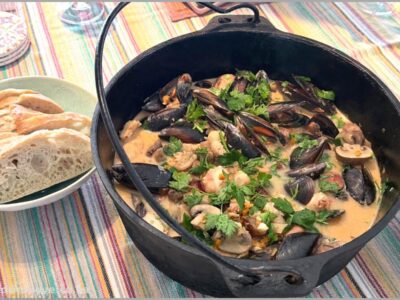
7.Garnish & Serve: As soon as the mussel shells pop open, pull the potjie off the heat. Discard any shut mussels. Garnish with fresh herbs and serve in deep bowls with toasted bread to mop up the sunset-orange cream sauce.
Chef’s Tip: Prepping Fresh Portuguese Black Mussels
When sourcing fresh mexilhão along the Silver Coast, you are getting a phenomenal product, but they do require a little manual prep to ensure your potjie stays grit-free. Here is the foolproof way to prep them:
- The Tap Test (Sort the living from the dead): Fresh mussels should be tightly closed. If you find one that is open, give it a firm tap on the counter. If the shell doesn’t slowly close up, the mussel is dead and must be discarded. Likewise, discard any with cracked or smashed shells.
- The Cold Scrub: Place the live mussels in a colander in the sink under running cold water. Use a stiff brush to scrub off any sand, grit, or barnacles clinging to the outside of the shells.
- The Hinge Pull (De-bearding): Most fresh mussels will have a hairy little clump protruding from the shell called the “beard” (byssal threads). To remove it, pinch the beard firmly between your thumb and forefinger, and pull it firmly towards the hinge (the pointed end) of the shell.
- Why this matters: If you pull the beard towards the wide opening of the shell, you will likely tear the mussel meat inside, killing it before it hits the pot.
- Timing is Everything: Only pull the beards off right before you are ready to cook. Removing the beard shortens the mussel’s lifespan, so if you prep them hours in advance, they may die in the fridge.